
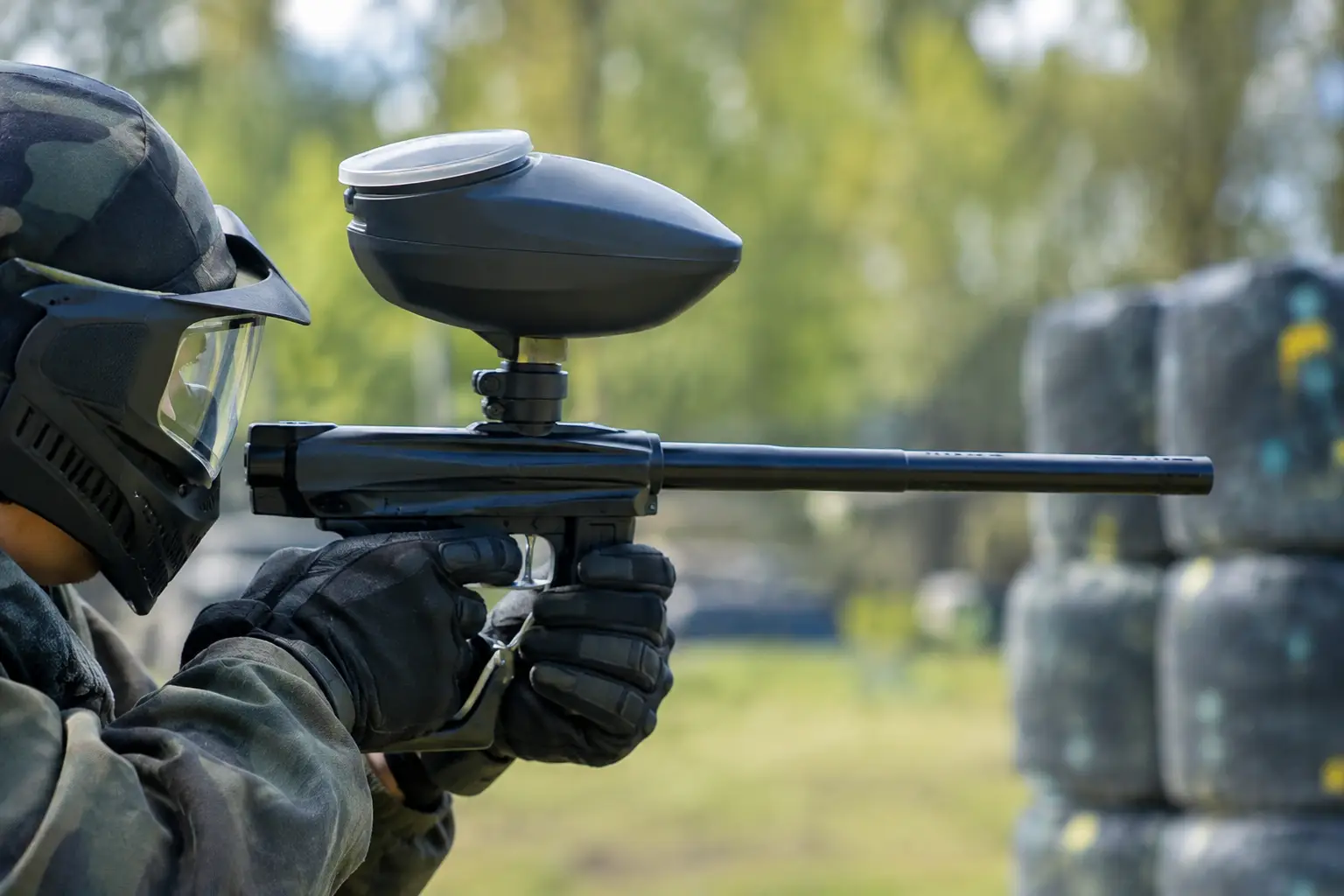
A barrel upgrade can tighten up a marker’s feel, reduce noise, and make it easier to match the paint you are shooting. But a barrel will not turn old, dimpled paint into laser beams or fix a dirty bolt, leaking regulator, or inconsistent air system. This paintball barrel guide focuses on the details that actually affect your purchase, so you can spend your money where it helps your game.
Paintball Barrel Guide: Start With Paint and Bore Size
Bore size is the inside diameter of the barrel, usually marked in thousandths of an inch, such as .679, .685, or .691. Paintballs are not all exactly the same size. Different brands, production batches, storage conditions, and Florida heat and humidity can all change their diameter slightly.
That is why a fixed-bore barrel can be a great value when you regularly shoot consistent paint, while an insert kit gives players more flexibility. With inserts, you keep one barrel back and change only the bore insert to suit the paint available that day. For players who shoot at different fields, attend events, or buy whatever fresh paint is available, that flexibility can be worth the added cost.
The practical goal is a sensible paint-to-barrel match, not the tightest possible fit. A ball that is extremely tight may be more likely to break in the barrel, especially if the paint is brittle, misshapen, or carried through a marker that is already chopping paint. A barrel that is much larger than the paint can allow more air to move around the ball as it exits, which may hurt consistency.
A simple test helps. Drop a clean, dry paintball into the barrel from the breech end. It should move through with a light puff of air, not fall straight through instantly and not need force to push it out. Test several balls, not just one. If the size varies from ball to ball, the problem is likely the paint, not your barrel choice.
What Bore Match Can and Cannot Do
A good bore match can improve air efficiency and support more consistent shots, particularly on a well-maintained marker. It also lets you tune your setup around the paint you are actually using instead of guessing.
It cannot overcome poor paint quality, a barrel coated in paint, loose detents, velocity swings, or bad shooting habits. Before blaming accuracy on your barrel, chronograph the marker, check that the barrel is clean, and inspect the paint. A single broken ball can turn an otherwise reliable setup into a frustrating day.
Barrel Length: Longer Is Not Automatically Better
Most paintball players will be well served by a barrel between 12 and 16 inches. A 14-inch barrel remains a popular middle ground because it is maneuverable, easy to point, and long enough for most marker setups. Woodsball players sometimes prefer 16 inches for the sight picture and extra reach around bunkers, while speedball players often favor shorter options that stay tight to the body.
Past a certain point, extra length does not make a paintball more accurate. Paintball velocity is regulated at the marker, and a ball is affected by wind, paint quality, barrel cleanliness, and the consistency of the air system long before a very long barrel becomes an advantage. A 20-inch barrel may look impressive, but it can be awkward in brush and easier to bump into cover.
Choose length based on how you play. If you move through tight bunkers or thick Florida woods, a compact setup is easier to manage. If you play recreational games where comfort and a natural sight line matter more than shaving fractions of a second off a snap shot, a slightly longer barrel may suit you well.
Porting Changes the Sound and Feel
Porting is the pattern of holes near the muzzle of a barrel. Those holes vent gas before the ball leaves the barrel, reducing the sharp report of the shot. More porting generally means a quieter marker, which can be useful for players who want a less aggressive sound signature during woodsball or scenario games.
There is a trade-off. Heavily ported barrels may use a little more air, and the porting can collect dirt or paint if you crawl, slide, or set the marker down in sand. A ported barrel is not a problem when maintained, but it does need attention after a messy game.
If sound is not a major concern, do not buy a barrel solely because it has the most elaborate porting pattern. A clean, correctly sized, well-made barrel with moderate porting will serve most players better than an expensive design chosen for looks alone.
One-Piece, Two-Piece, and Insert Barrels
A one-piece barrel is simple. The back and front are permanently connected, so there are fewer parts to track and clean. It is often the best budget-friendly option for a beginner who uses the same brand and grade of paint most weekends.
A two-piece barrel separates into a back and a front. The back controls bore size, while the front handles length and porting. This gives you more options without requiring a completely new barrel every time you want to change a setup.
Insert systems take that flexibility further. A barrel back accepts interchangeable inserts in several bore sizes. This is a strong choice for dedicated players, tournament players, and anyone who wants to adjust for changing paint. The downside is cost and organization. Inserts need to stay clean, protected, and correctly installed. Losing the one size you need before a game is no fun.
Do not overlook thread compatibility. A barrel must use the correct thread type for your marker. Many modern markers share common threading, but not all do, and older markers can be different. Bring your marker to the shop when possible. Confirming fit in person is faster and cheaper than ordering a barrel that cannot be installed.
Accuracy Begins With Maintenance
A quality barrel only works when it is clean. Carry a barrel swab or squeegee every time you play. If paint breaks, clean the barrel immediately rather than shooting through it and hoping the next few shots clear it out. The same applies to moisture, mud, and debris around the muzzle.
Use a soft pull-through squeegee or swab made for paintball barrels. Avoid tools that can scratch the bore. At home, clean the barrel with warm water and a soft cloth, then let it dry completely before storing it. Never leave paint residue in a barrel after a game, especially in a hot vehicle or garage.
Your marker needs attention, too. Keep the bolt system clean, replace worn detents, and make sure your tank and regulator are delivering consistent pressure. If your marker starts breaking paint repeatedly, do not keep changing barrel inserts until the issue disappears. The cause could be old paint, excessive velocity, a dirty breech, an incorrect detent, or a mechanical problem that needs service.
Choose the Upgrade That Fits Your Game
For a newer player, a reliable 12- to 14-inch barrel in the correct thread pattern is usually the smart first upgrade. Put the rest of the budget toward quality paint, a comfortable mask, a good air tank, and basic maintenance gear. Those items make a bigger difference to a day of play than chasing a premium barrel immediately.
For experienced players, an insert system can make sense when paint selection changes often and the rest of the marker is already tuned and dependable. Players who want a quieter woodsball setup may prioritize porting. Players who want a clean, lightweight tournament setup may care more about balance and a shorter overall profile.
Before buying, check four things: your marker’s thread type, the paint sizes you normally encounter, the barrel length that fits how you play, and whether you will realistically use multiple inserts. An honest answer to those questions usually points to the right setup.
At Combat Zone Sports, we would rather help you match a barrel to your marker and budget than sell you an upgrade you do not need. Bring in your marker, talk through the paint you use, and keep your setup clean between games. The right barrel should make game day simpler, more consistent, and more fun to shoot.