
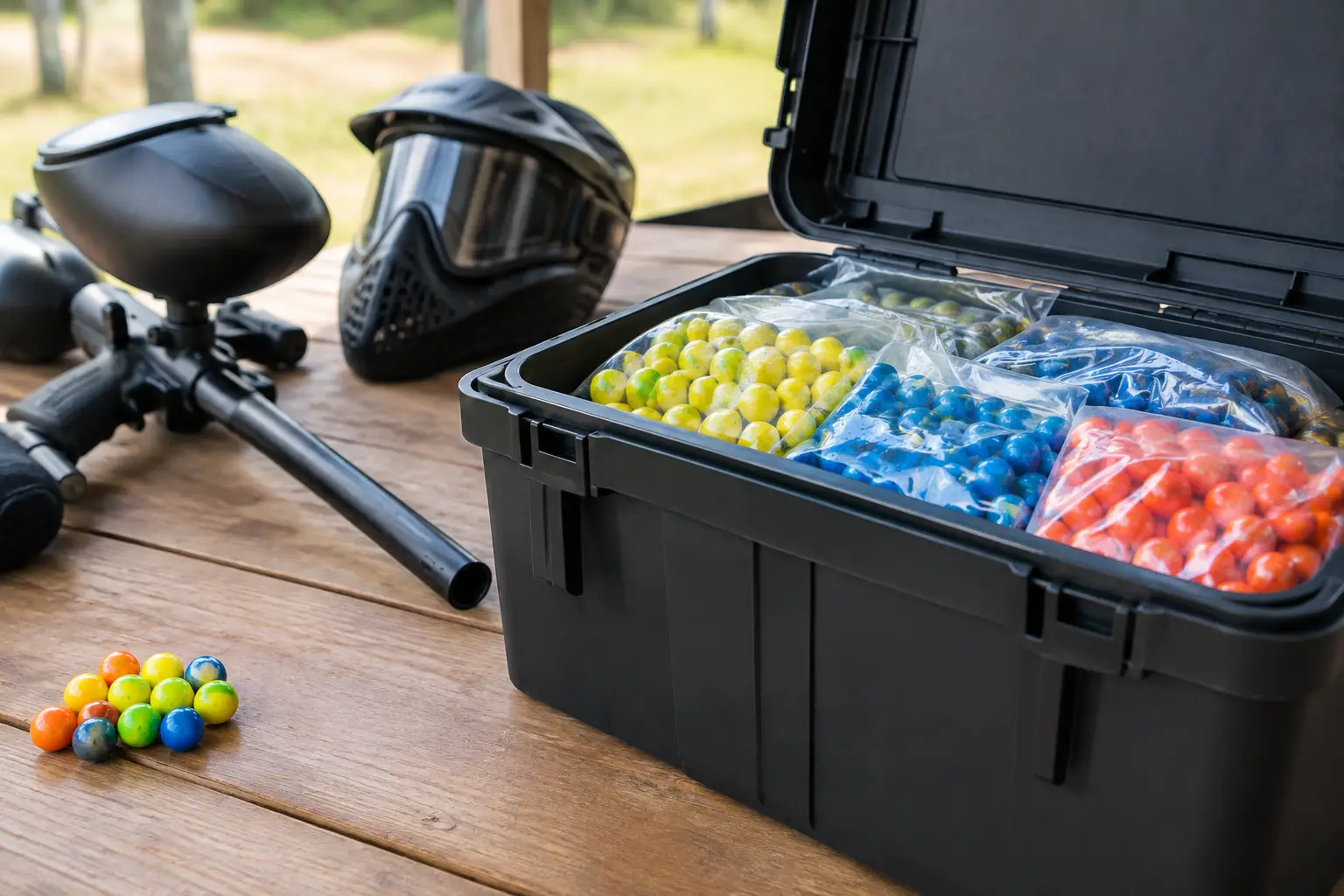
A fresh case of paint can turn into broken shells, dimples, and barrel breaks long before game day if it sits in the wrong place. Knowing how to store paintballs properly protects the money you spent and gives your marker the consistent paint it needs to shoot well.
Paintballs are not shelf-stable like BBs. Their gelatin shells and water-based fill react to heat, cold, moisture, pressure, and time. The goal is simple: keep them cool, stable, clean, and gently rotated until you are ready to play.
How to Store Paintballs Properly at Home
The best place for paintballs is inside your home, in a room with fairly stable conditions. A closet, spare room, or interior storage cabinet is usually better than a garage, shed, attic, car trunk, or covered patio. In Central Florida, those spaces can get hot and humid fast, even when the weather feels mild outside.
Aim for a cool, dry environment, generally around 60 to 75 degrees Fahrenheit. You do not need laboratory-perfect conditions, but you do want to avoid big temperature swings. Heat softens the shell and can make paintballs swell or stick together. Excess cold can make shells brittle. Both conditions lead to breaks, poor accuracy, and inconsistent velocity.
Humidity matters too. Paintball shells can take on or lose moisture over time. Very dry air may make them brittle, while high humidity can soften the shell and contribute to dimpling. A climate-controlled room is usually enough for most players. If your home has major humidity issues, a basic room dehumidifier can help, but do not blast the paintballs with direct dry air.
Keep Paint Out of the Refrigerator and Freezer
Refrigerators and freezers are not good long-term storage solutions. The cold can harden or weaken shells, and condensation becomes a problem when you bring the paint back into warmer air. Freezing can damage both the gelatin shell and the fill.
The same rule applies to leaving a case in a vehicle overnight before a game. A car may be convenient for loading up, but it is one of the fastest ways to ruin paint. Florida heat can turn a trunk into an oven, while a cold snap can leave shells more fragile than you expect.
Leave Paintballs in Their Original Sealed Bags
If the paintballs are still factory sealed, leave them that way until you need them. The original bag helps protect the paint from dust, moisture changes, and unnecessary handling. Keep the bags inside the original cardboard case when possible, since the case adds another layer of protection from light and pressure.
Do not stack heavy gear, tanks, markers, or cases of ammo on top of paintball boxes. The bottom bags can become compressed, causing flat spots and broken shells. Store cases flat on a shelf or on the floor in a clean, dry area where they will not be crushed.
Once a bag is opened, use the paint sooner rather than later. You can still store leftover paint successfully, but it is more exposed to air and handling. Put unused paintballs into clean, dry pods or a paint caddy with a secure lid. Avoid containers that smell strongly of chemicals, fuel, food, or cleaning products, because odors and residue can transfer to the paint.
Rotate the Paintballs, Do Not Shake Them
One of the most useful habits is gently rotating stored paint every few days or once a week. Turn the sealed bags or carefully roll the case so paintballs do not sit under constant pressure in the same position for weeks. This helps reduce dimpling and keeps the fill distributed more evenly.
There is no need to shake a box aggressively. Hard shaking can cause unnecessary shell-to-shell impacts, especially if the paint has been sitting for a while. Think gentle movement, not mixing a cooler full of drinks.
If you are storing paint in pods, rotate the pods slowly in your hands. Check that the lids are fully closed and that no paint has leaked inside. A single broken paintball can coat the rest, making them stick together and creating a messy hopper problem later.
Check Paint Before You Load It
Before you head to the field, inspect a few paintballs from each bag or pod. Good paint should be round, clean, and free of deep dimples, cracks, leaking fill, or sticky residue. A slight seam is normal. A dent that does not recover, a wrinkled shell, or paint that feels unusually soft is a warning sign.
If you find one broken ball in a bag, do not automatically throw away the entire bag. Separate the clean paint from the damaged paint if possible, then wipe the usable paintballs carefully with a soft, dry microfiber cloth. Do not wash them with water. Water can affect the shell and make the situation worse.
Paint that is badly coated, swollen, misshapen, or brittle is not worth forcing through your marker. Trying to shoot questionable paint often creates repeated barrel breaks, inaccurate shots, and a long cleaning job. It can also make a perfectly good marker look like it has a mechanical problem.
Let Paint Acclimate Before Playing
If your paint has been stored in an air-conditioned room and you are heading into a hot, humid Florida day, give it time to adjust gradually. Keep the case closed and out of direct sun while you load your gear. Rapid temperature changes can cause condensation and affect shell performance.
The same applies after bringing paint home from a hot field. Do not put warm paint immediately into a very cold room or refrigerator. Let it come down to room temperature naturally in a shaded indoor area.
Buy the Right Amount for Your Timeline
Paintballs have a practical shelf life, and the best storage plan starts with buying for the games you expect to play. If you play next weekend, buying a case now is usually no issue when stored correctly. If you are purchasing several cases for months of uncertain plans, understand that even well-kept paint can change over time.
Higher-grade tournament paint is often designed for consistent performance and a more brittle break on target. That can also mean it is less forgiving of poor storage than a tougher recreational-grade paintball. The right paint depends on your marker, field rules, weather, and how soon you will use it.
For players stocking up before a birthday group, scenario event, or team practice, plan with a little margin instead of buying far more than the group can realistically shoot. Fresh paint is always easier to manage than old inventory sitting in a closet through a Florida summer.
Common Paintball Storage Mistakes
Most ruined paint comes down to a few avoidable mistakes:
- Leaving cases in a car, garage, shed, attic, or direct sunlight.
- Stacking heavy equipment on paintball boxes.
- Storing opened paint in dirty, damp, or loosely sealed containers.
- Forgetting to rotate paint that will sit for more than a week or two.
- Trying to revive badly damaged paint by chilling, freezing, washing, or forcing it through a marker.
If you are unsure whether a case is still good, bring it by Combat Zone Sports before game day. An experienced pro-shop team can look at the shell condition, help narrow down whether the issue is paint or marker-related, and keep you from spending the day chasing barrel breaks.
Treat paintballs like the performance ammo they are. Keep them indoors, cool, dry, protected, and gently rotated, then inspect them before loading up. That small routine gives you a much better chance of opening your case on game day and finding paint that is ready to fly straight.