
A single broken paintball can turn a good marker into a wild shooter. Balls start curving, accuracy disappears, and the next shot may break too. Knowing how to clean paintball barrel residue correctly gets you back in the game without scratching the bore or creating another problem.
The good news is that most paint cleanup is simple. Paint fill is designed to wash away, so the job is less about harsh chemicals and more about using the right tool, cleaning from the right direction, and making sure the barrel is completely dry before you shoot again.
What You Need to Clean a Paintball Barrel
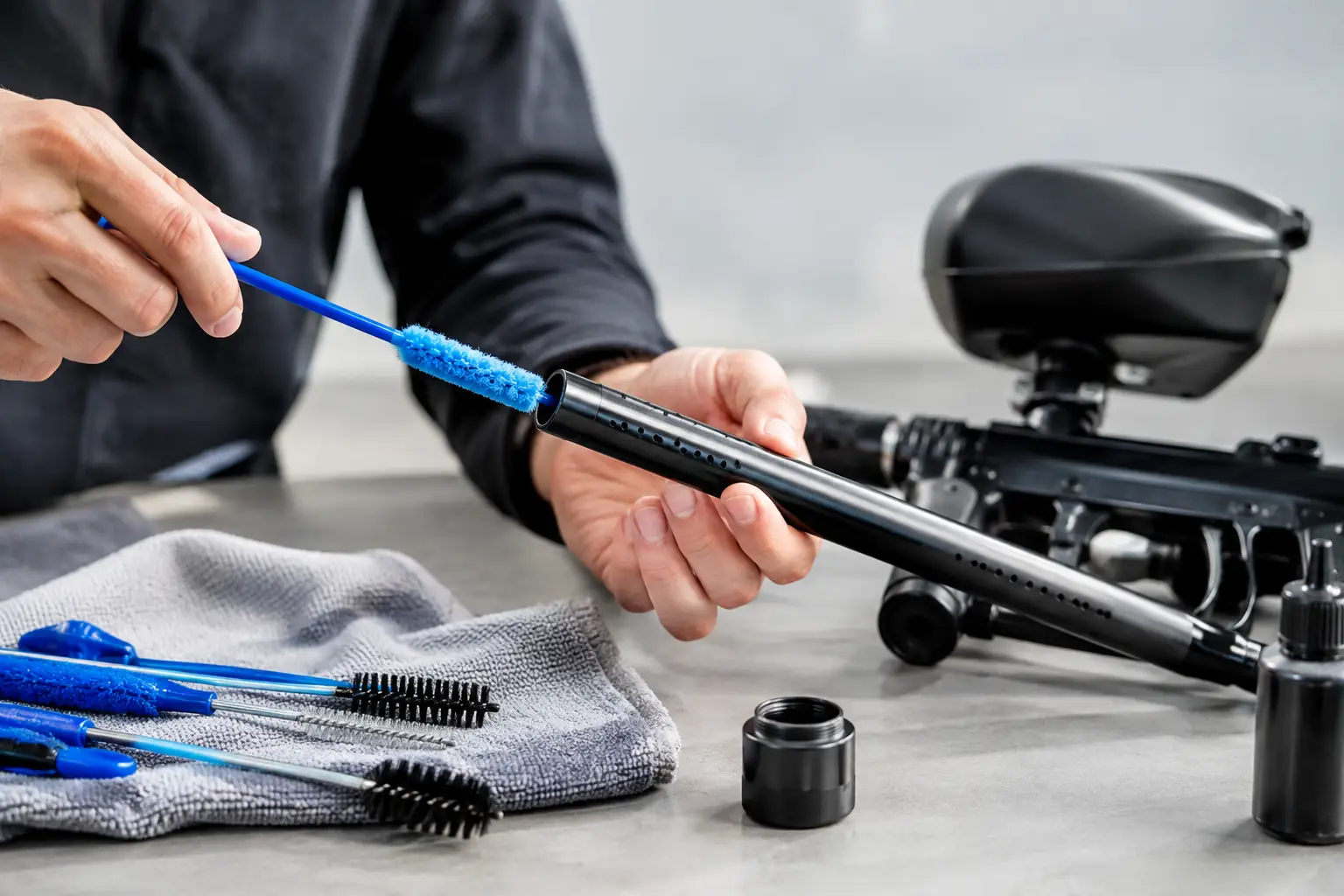
For normal on-field cleanup, use a barrel swab or pull-through squeegee made for paintball. A swab with an absorbent fabric end and a rubber squeegee end works especially well: the rubber edge moves the heavy paint out, while the fabric section removes the remaining moisture.
At home, you may also want warm water, a small amount of mild dish soap, clean microfiber cloths, and a soft barrel brush designed for paintball equipment. Avoid household wire brushes, metal cleaning rods, abrasive pads, and anything that can score the inside of the barrel. A tiny scratch in the bore can collect paint and affect consistency over time.
If you use a barrel system with separate backs, tips, or bore inserts, clean each piece individually. Paint and shell fragments often hide at the threads and inside small-diameter inserts.
How to Clean a Paintball Barrel After a Break
Before handling the barrel, make the marker safe. Remove the air source, remove the hopper, clear any paintballs from the breech, and follow your marker manufacturer’s shutdown procedure. You do not want to work around a pressurized marker or accidentally dry-fire it while checking your progress.
Remove the barrel when possible
Unscrew the barrel from the marker. Cleaning it off the marker keeps paint and moisture from being pushed into the breech, bolt area, eyes, detents, or electronics. It also lets you see whether the barrel is truly clean from end to end.
If you are on the field and need a fast fix, you can use a pull-through swab without removing the barrel. That is fine for getting through the next point or game, but give the barrel a proper off-marker cleaning when you have time.
Pull the swab through, do not scrub aggressively
Feed the cord or flexible end of the swab through the breech end and pull it out through the muzzle. This follows the direction a paintball travels and pulls paint, shell pieces, and moisture out of the front of the barrel.
Make one steady pass with the squeegee side first if your swab has one. Then make one or two passes with the absorbent side. Do not jam the swab in and yank repeatedly. If there is a large shell fragment or a thick patch of paint, remove it gently with a soft cloth and then run the swab again.
A clean barrel should look clear when you hold it toward a light. More importantly, it should feel dry. Even a little wet paint fill can make the first few balls roll inconsistently or pick up residue as they travel down the bore.
Wipe the threads and breech end
Use a clean cloth to wipe the barrel threads, the outside of the barrel, and the breech-facing end. Paint left on the threads can make the barrel harder to remove later. Paint around the rear of the barrel can also transfer back into the breech when you reinstall it.
Take a quick look at the marker’s detents and breech while the barrel is off. If a ball broke badly, there may be shell pieces or fill in that area too. Clean only what you can reach safely, and avoid spraying liquids into electronic marker eyes or internal components.
Reinstall only when the bore is dry
Thread the barrel back in by hand. It should go on smoothly without forcing it. Once the marker is reassembled, test it with a few shots in a safe direction and with proper eye protection on. If shots still hook or curve, stop and inspect for leftover paint in the barrel, breech, hopper feedneck, or paintballs that are damaged in the hopper.
Deep Cleaning a Paintball Barrel at Home
Field swabs are for speed. A deep clean is worth doing after a major barrel break, a muddy game day, long-term storage, or any time the barrel still feels sticky after swabbing.
Start by rinsing the removed barrel with warm water. For stubborn residue, add a drop or two of mild dish soap to the water and use a soft cloth or paintball-safe brush. Keep the cleaning gentle. The goal is to loosen old fill, not polish the bore with force.
Rinse thoroughly, then dry the barrel inside and out with a lint-free cloth. Let it air-dry muzzle-down or on a clean towel for a few minutes before storing it. Water left in a barrel is just as likely to affect your first shot as leftover paint.
Do not soak barrel inserts, thread areas, or external finishes in harsh cleaners. Strong solvents are usually unnecessary for paint fill and can be tough on O-rings, coatings, adhesives, and rubber parts elsewhere on your setup. If something will not come off with warm water and mild soap, bring it to a knowledgeable pro shop before reaching for aggressive chemicals.
Common Barrel-Cleaning Mistakes
The biggest mistake is firing repeatedly to “shoot the paint out.” That may clear some residue, but it can also spread paint through the barrel, foul the breech, and break additional paintballs. Stop, clean it, and save your paint.
Another common mistake is using paper towels inside the bore. They can tear, leave fibers behind, and do a poor job of removing moisture. A dedicated swab is inexpensive and belongs in every player’s gear bag.
Players also sometimes clean only the front half of the barrel because that is where paint is visible. The rear section matters just as much. Paint near the breech can cause a ball to drag, spin, or break before it ever reaches the middle of the barrel.
Finally, do not oil the inside of your barrel. Oil can contaminate paintballs, attract dirt, and create inconsistent shots. The bore should be clean and dry, not lubricated.
How Often Should You Clean Your Barrel?
Clean the barrel immediately after any break. Even if the marker seems to shoot normally, paint residue can cause the next break or make your accuracy fade later in the day.
For routine maintenance, run a clean swab through the barrel after every game day and before putting the marker away. If you play in Florida humidity, rain, sand, or dusty staging areas, inspect it more often. Moisture and debris can turn a small amount of paint into a stubborn mess.
Tournament and frequent recreational players should carry at least one barrel swab plus a backup. A dirty or soaked swab eventually becomes part of the problem, especially after several breaks. Wash reusable swabs after use and let them dry completely before packing them for the next game.
When a Clean Barrel Does Not Fix Accuracy
If the barrel is clean and dry but shots still curve, do not assume you need a new barrel. Check the paint first. Dimpled, swollen, brittle, or poorly stored paint can shoot badly through any barrel. A poor paint-to-bore match can also reduce consistency, although it will not usually create the dramatic hook associated with a barrel break.
Then inspect the barrel for dents, deep scratches, damaged threads, or a loose insert. Check your hopper and breech for broken paint, and make sure your marker’s velocity is set safely and consistently. Air-system issues, bolt problems, worn detents, and low-quality or mismatched paint can all look like an accuracy problem.
If you are not sure where the issue starts, bring the marker and the barrel in together. Combat Zone Sports can help separate a simple cleanup issue from a maintenance or setup problem, so you do not spend money replacing parts that are still doing their job.
A clean, dry barrel and a fresh swab in your gear bag are small habits that save paint, protect your marker, and keep the next shot honest.