
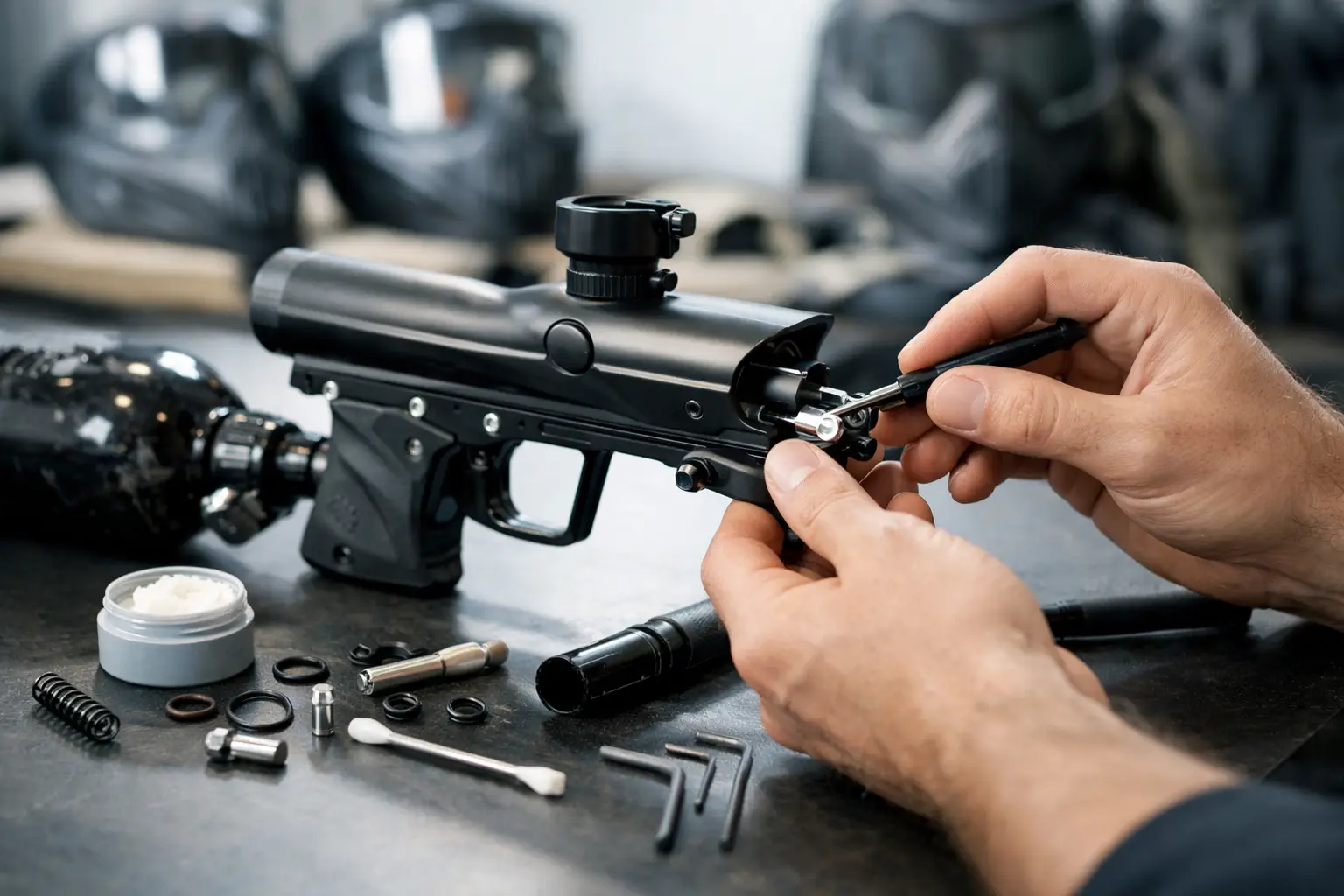
A marker that shoots great in the backyard but starts leaking at the field can ruin a game day fast. Free lifetime paintball marker maintenance is about preventing that moment, not just fixing a problem after it costs you a match, a bag of paint, or a weekend with your crew.
For new players, maintenance support removes a lot of uncertainty from buying a first marker. For experienced players, it means having a knowledgeable set of eyes available when performance changes, parts wear out, or an upgrade needs to work with the rest of the setup. Good support keeps a marker dependable without pushing you toward parts or services you do not need.
What Free Lifetime Paintball Marker Maintenance Means when you purchase from Combat Zone Sports in Cocoa Fl.
Paintball markers operate under pressure, cycle quickly, and spend plenty of time around paint residue, dirt, moisture, and Florida heat. Even a quality marker needs routine attention. O-rings dry out, seals wear, detents get tired, batteries die, and old paint inside the breech can create problems that look more serious than they are.
Free lifetime maintenance gives customers an ongoing place to bring in a marker for basic care, inspection, and practical advice after purchase. At Combat Zone Sports, that support is part of the reason a pro-shop purchase can be more valuable than a box arriving at your door. You get help from people who work on paintball equipment and can tell the difference between a quick maintenance issue, a worn part, and a repair that deserves more involved service.
The exact work needed always depends on the marker and its condition. Basic maintenance is not the same as replacing every worn component, repairing impact damage, or installing a major performance package. If a part, labor-intensive repair, or upgrade is required, an honest shop should explain why before moving forward. That is how you protect your budget and make a smart decision about an older marker versus a newer platform.
Why Lifetime Marker Care Matters
Most marker problems do not begin as total failures. They begin with little warning signs: a faint leak after airing up, inconsistent velocity, a bolt that does not cycle smoothly, chopped paint, or a trigger that feels different from the last game. Ignoring those signs can turn a simple seal replacement or cleaning into a field-side headache.
Regular maintenance also makes paintball safer and more predictable. A marker that is not functioning consistently can create velocity issues, unreliable firing, or air-system concerns. Before every game, players should still follow field rules, use a barrel cover, check their air system, and chronograph their marker. Maintenance support helps the equipment perform correctly, but it never replaces safe handling.
There is also a real cost benefit. Beginners often spend money chasing a problem with random upgrades. A new barrel, electronic trigger, loader, or regulator will not fix a damaged detent, a dirty bolt system, or a simple air leak. Starting with an inspection can save money and keep the marker closer to its intended performance.
Maintenance Helps Every Type of Player
A recreational player may only use a marker once a month, but that does not mean it should sit dirty in a gear bag between games. Dried paint, old batteries, and neglected O-rings can all show up when the group is finally ready to play.
Competitive and frequent players put more shots through their equipment, so their maintenance needs can come up faster. They may also be running electronic markers, higher-capacity loaders, HPA systems, and tuned settings that demand closer attention. The goal is not to over-service a marker. It is to keep it consistent enough that the player can focus on lanes, movement, communication, and making the next shot count.
When to Bring Your Paintball Marker In
Do not wait for a complete breakdown. Bring the marker in when something changes, especially if it is leaking, failing to fire, shooting inconsistently, breaking paint, or cycling differently than normal. A quick look before a major event is also a smart move, particularly if the marker has been stored for a season or has not been aired up in a while.
It is worth bringing in the full setup when possible. The marker may not be the only source of the issue. A worn tank O-ring, weak battery, damaged hopper, incompatible feedneck setup, or poor-quality paint can affect performance. Having the marker, air tank, loader, and any relevant accessories together gives the technician a clearer picture.
If your marker takes a hard hit, falls onto concrete, gets soaked in heavy rain, or has a serious paint break through the breech and bolt area, clean it as soon as practical and have it checked if anything feels off. Do not force the trigger or keep airing it up repeatedly if you hear a major leak. That can make a small issue worse.
Bring Useful Details With You
You do not need to diagnose the marker before bringing it in, but details help. Let the staff know when the problem started, whether it happens with air attached, what type of tank you use, and whether the marker was recently upgraded or adjusted. If it only happens with a certain loader, paint, or battery, mention that too.
A clear description can shorten the process. “It leaks from the grip frame after I air it up” is more useful than “it does not work.” So is telling the technician whether the marker has been sitting for six months or was shooting fine until the last game.
What You Should Still Do at Home
Lifetime maintenance support works best alongside simple owner care. You do not need a full workbench or advanced technical knowledge to keep a marker in better condition. After playing, wipe down the exterior, remove broken paint from accessible areas, and store the marker clean and dry. Remove the battery from electronic markers if they will sit for an extended period.
Use the manufacturer-approved lubricant and only where the manual calls for it. More grease is not always better. The wrong product, applied in the wrong place, can attract debris or cause seal problems. Likewise, do not use household oils, random sprays, or improvised tools on paintball equipment.
Pay attention to your air system as well. Keep the tank’s threads and O-ring clean, do not leave a pressurized marker sitting unattended, and protect the regulator from impacts. HPA and CO2 systems have different characteristics, and your marker must be set up for the air source it is designed to use. If you are unsure, ask before connecting anything.
Maintenance Before Upgrades
Upgrades can be worthwhile when they solve a real need. A better loader can support a faster electronic marker. A more comfortable trigger can improve feel. A barrel option may help you match bore size to the paint you are using. But maintenance should come first.
A clean, properly functioning stock marker will usually serve a newer player better than a heavily upgraded marker with unresolved leaks or inconsistent velocity. The same principle applies to experienced players. Before changing dwell settings, regulators, bolts, or firing modes, make sure the marker is mechanically sound and legal for the field where you play.
A pro-shop team should be willing to say, “You do not need that yet.” That is not a missed sale. It is the kind of advice that keeps players coming back with equipment they trust.
A Better Way to Stay Ready for Game Day
Paintball gear earns its value when it works on the day you need it. Free lifetime paintball marker maintenance gives players in Cocoa, Melbourne, Titusville, Palm Bay, Orlando, Daytona Beach, and across Central Florida a practical reason to stay ahead of leaks, wear, and performance changes.
Bring your marker in before the next big game, especially if it has been sitting, acting differently, or needs a fresh set of eyes. A few minutes of honest maintenance advice can keep a small issue from becoming the reason you spend the day on the sidelines.