
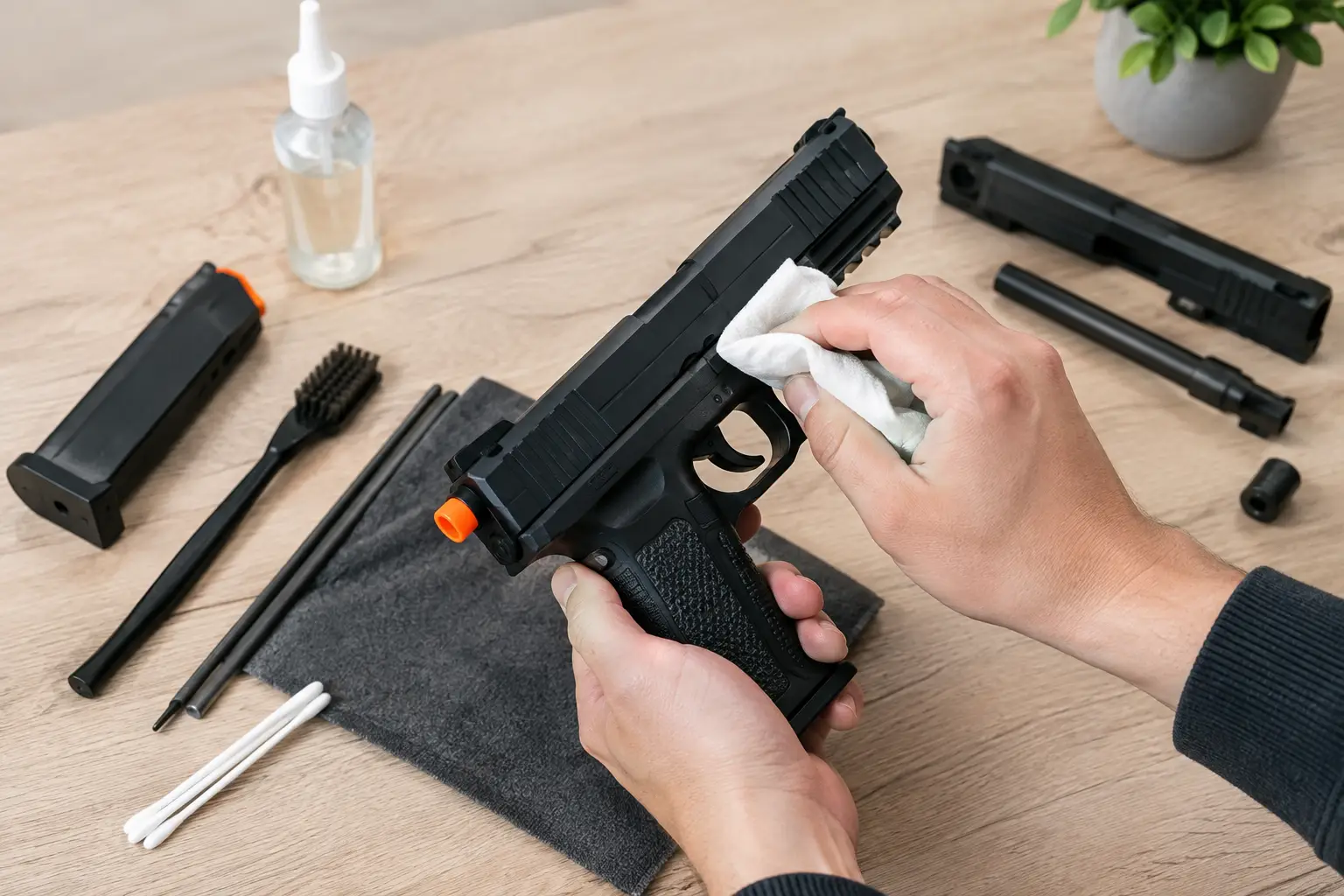
A dirty barrel can turn a rifle that was shooting straight last weekend into one that sends BBs wandering at 50 feet. Learning how to clean an airsoft gun is less about soaking it in oil and more about cleaning the right areas, leaving the wrong ones alone, and catching small problems before they cost you a game day.
Whether you run an AEG, gas blowback pistol, HPA setup, or a spring rifle, start with one rule: make the gun safe before you put a cleaning rod anywhere near it.
Start With a Safe, Unloaded Airsoft Gun
Remove the magazine first. On an AEG, disconnect and remove the battery if the compartment allows it. On a gas gun, remove the magazine and make sure there is no BB in the chamber. Point the muzzle in a safe direction and fire once or twice on semi-auto to confirm the chamber is clear.
Do not look down the barrel to check it. Use a flashlight at the breech end if needed, or inspect with the upper and lower separated only if your platform is designed for easy field stripping. Eye protection is still a good idea during cleaning, especially around gas magazines and springs.
Set up on a clean bench or table with good lighting. You do not need a giant tool kit for routine maintenance. A cleaning rod or pull-through, lint-free patches, microfiber cloths, cotton swabs, and a small amount of appropriate silicone lubricant will handle most jobs. Keep your BBs and magazines away from the work area so dirt does not end up inside them.
How to Clean an Airsoft Gun Barrel Properly
The inner barrel matters more than almost any other part you can clean at home. Dust, broken BB residue, excess oil, and even cheap ammunition residue can affect accuracy and consistency.
Use a purpose-built airsoft cleaning rod or a flexible pull-through. Wrap a clean, lint-free patch around the slotted end of the rod so it fits the bore snugly without forcing it. Insert it carefully from the breech end whenever possible and push it through in one smooth motion. Pull it out, replace the patch, and repeat until the patch comes out clean.
If the barrel is heavily fouled, lightly dampen a patch with isopropyl alcohol or a barrel-safe cleaner, then follow it with several dry patches. The goal is a clean, dry bore. Do not spray cleaner directly into the barrel, hop-up chamber, gearbox, or receiver.
Avoid putting silicone oil, grease, or general-purpose gun oil inside the barrel. A slick inner barrel sounds helpful, but it can collect dirt and contaminate the hop-up bucking. That usually creates the exact accuracy issue you were trying to fix. The bucking needs clean, predictable contact with the BB, not an oily surface.
Clean the Hop-Up Area Carefully
If accuracy is still inconsistent after cleaning the barrel, inspect the hop-up area. Remove the inner barrel and hop-up unit only if you are comfortable with your model’s disassembly process. Wipe visible dirt from the chamber and bucking with a dry, lint-free cloth or swab.
Do not stretch, scrape, or soak the bucking. If it looks torn, swollen, hardened, or glazed, cleaning will not restore it. Replace it with a compatible bucking instead. Players often chase accuracy with expensive upgrades when a worn bucking or dirty barrel is the real problem.
Wipe Down the Exterior and Moving Parts
Use a microfiber cloth to remove field dust, sweat, mud, and moisture from the receiver, stock, rail, grip, and optics. For dried-on dirt, use a cloth that is barely damp, then dry the area immediately. Keep moisture out of the trigger, battery compartment, motor grip, electronic controls, and optic turrets.
Pay attention to the muzzle, magazine well, charging handle area, and folding stock joints. These spots collect grit quickly. A soft brush or dry swab works well for seams and tight areas.
For gas blowback pistols and rifles, field-strip according to the manufacturer instructions and wipe old grime from slide rails, bolt contact surfaces, and accessible moving parts. Apply a very small amount of airsoft-safe silicone lubricant to seals and metal-on-metal contact points where the manufacturer calls for it. More lubricant is not better. Excess oil attracts dirt, works its way toward the hop-up, and can make a gas gun sluggish rather than smooth.
AEG owners should generally keep routine cleaning external. The gearbox is a sealed assembly, and opening it without the right tools and experience can turn a basic cleaning job into a spring-and-shim repair. Clean the barrel, receiver, magazines, and battery contacts. If you hear grinding, get intermittent firing, or notice a major drop in performance, have the internals inspected instead of spraying lubricant through openings.
Clean Magazines Based on Their Type
Magazines cause a surprising number of feeding problems. Keep the outside clean and make sure the feed lips are free of dirt and broken BB fragments. Never pour oil into an AEG mid-cap or high-cap magazine. It can gum up the internal channel and transfer onto BBs, contaminating your barrel and hop-up.
For AEG mid-caps, a gentle shake can dislodge loose debris. If a mag consistently misfeeds, inspect the feed lips, spring tension, and BB channel rather than forcing it. High-caps should be emptied after play, and their winding wheel should be kept clear of mud and sand.
Gas magazines need a little more attention. Wipe the exterior, inspect the feed lips, and check the baseplate for damage. A tiny amount of silicone oil on the fill valve and accessible O-rings can help keep seals from drying out, but do not flood them. If a magazine leaks, do not assume oil is the cure. A damaged valve, flattened O-ring, or cracked base can require proper repair or replacement.
Take Care of Batteries, Gas, and Optics
Battery care is part of airsoft gun maintenance, even though the battery is not inside the barrel or gearbox. Disconnect batteries after play. Check the connector for dirt, corrosion, melted plastic, or loose wiring. Wipe contacts dry with a clean cloth. Never use a damaged, swollen, or hot lithium battery.
Store LiPo batteries at the correct storage charge and use a proper balance charger. Do not leave a battery connected in an AEG between games, even if your trigger unit has low-voltage protection. For NiMH packs, let them cool before charging and avoid storing them in wet gear bags.
For green gas or propane magazines, many players store them with a small amount of gas inside to help maintain seal pressure. CO2 cartridges should not be left installed for long storage unless the manufacturer specifically recommends it. Check your manual when in doubt, because designs vary.
Optics deserve the same restraint as the barrel. Blow loose dust away first, then use a lens cloth. Do not use your shirt, paper towels, or an oily rag on lenses. If your red dot is flickering, check the battery cap and battery contact before assuming the sight is failing.
What Not to Do When Cleaning Airsoft Guns
Most avoidable damage comes from using the wrong product or too much of a product. Skip petroleum oils, penetrating sprays, brake cleaner, harsh solvents, and household degreasers. They can damage rubber seals, plastics, finishes, and hop-up components.
Do not wash an airsoft gun with a hose, submerge it, or blast it with high-pressure air. Compressed air can push grit deeper into switches, seals, and moving assemblies. A soft brush and controlled wiping take longer, but they do the job without sending dirt where you cannot reach it.
Also resist the urge to disassemble every screw after every game. Routine maintenance should be simple. Deep disassembly makes sense when you are addressing a known issue, installing an upgrade, or performing scheduled service on a hard-used platform.
Build a Cleaning Schedule That Matches Your Play
For occasional recreational play, wipe the gun down and clean the barrel after each outing or whenever accuracy changes. For regular weekend players, a quick post-game inspection should become habit: clean the barrel, check magazine feed lips, inspect battery leads or gas seals, and make sure screws and accessories are secure.
Florida players have an extra reason to stay on top of exterior care. Humidity, rain, sand, and dusty outdoor fields can get into gear fast. Dry your gun and magazines before putting them in a case, especially after a wet game. A sealed case with damp gear inside is an easy way to invite corrosion and mildew.
If your gun still has poor range, inconsistent shots, feeding problems, or strange sounds after basic cleaning, stop before you create a bigger repair. The team at Combat Zone Sports can help identify whether you are dealing with a dirty barrel, worn hop-up parts, magazine trouble, battery issue, or an internal repair that needs a proper bench. A clean airsoft gun should be ready to perform, not just look good on the wall.