
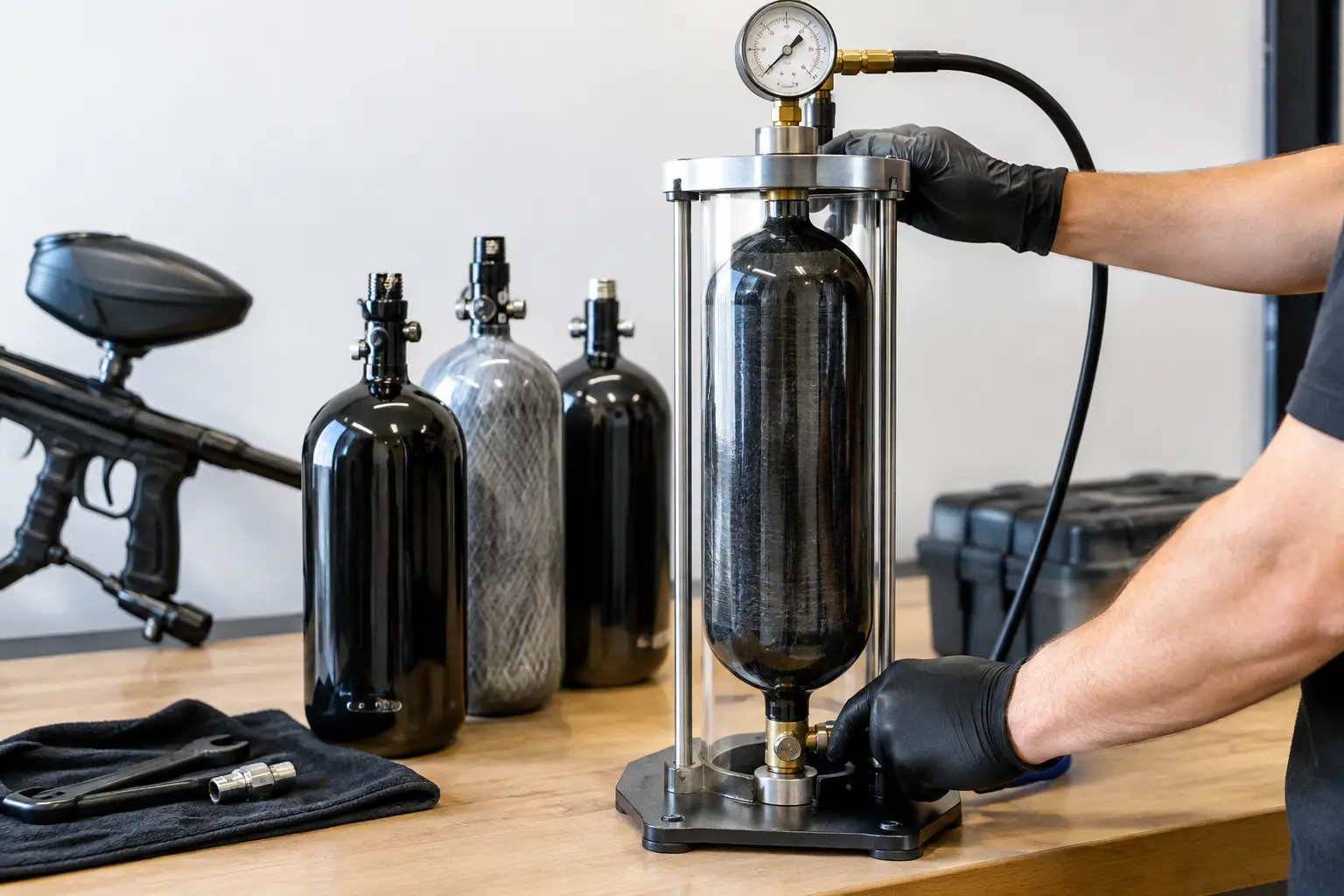
A tank can look perfectly fine in your gear bag and still be overdue for testing. If you are asking, “when should paintball tanks hydrotest?” the short answer is: follow the date stamped or labeled on the cylinder, not your best guess. Most paintball air systems need hydrostatic testing every five years, but the exact requirement comes from the tank itself.
Showing up for a game with an out-of-date tank can mean no fills, no matter how new the regulator or marker may be. Knowing how to check your tank date keeps you from losing a day of play – and helps keep a pressure vessel that may hold 3,000 or 4,500 psi in safe condition.
When Should You Hydrotest Paintball Tanks?
For most paintball HPA tanks and CO2 cylinders in the United States, hydrostatic testing is required every five years from the original manufacture date or the most recent hydrotest date. The month and year are usually printed on the tank label, stamped into the cylinder, or marked near the neck.
For example, a tank marked 06-21 is generally due for retesting in June 2026. Do not wait until the end of the season if the date is close. Fields, air stations, and pro shops may refuse to fill a tank once its test month has passed, and their fill policy may be stricter than what you expected.
The five-year rule covers a large share of paintball tanks, especially common aluminum CO2 bottles and carbon-fiber-wrapped HPA systems. Still, the cylinder label is the authority. Federal cylinder markings, manufacturer instructions, and any special permit information on that bottle determine its service and retest requirements.
HPA tanks usually have a 15-year service life
Most carbon-fiber HPA paintball tanks are eligible for hydrostatic testing every five years, but they also have a maximum service life of 15 years from their original manufacture date. That means a tank made in 2014 may be hydrotested in 2019 and 2024, yet it will generally be retired in 2029 even if it passes its final test.
This catches experienced players off guard because a tank may have a fresh hydro date but still be near its final service date. Read both dates. A current test sticker does not reset the tank’s original 15-year lifespan.
Not every cylinder construction follows the same long-term rules. Aluminum tanks, steel tanks, and specialty cylinders can have different markings and eligibility. If the label is damaged, missing, or difficult to read, do not assume the tank is good to fill. Bring it to a knowledgeable pro shop for a closer look before game day.
How to Find Your Paintball Tank’s Date
Start by looking around the cylinder itself, not the regulator. On an HPA tank, the important information is commonly located on the printed label around the bottle. You may see the manufacturer name, DOT or TC markings, working pressure, original born date, and a statement about the required retest interval.
CO2 tanks often have a stamped date on the shoulder or neck of the cylinder. Those stamps can be faint after years of use, paint residue, and gear-bag wear. Wipe the bottle down and inspect it under good light rather than scratching at the markings or using harsh abrasives.
A tank that has already been hydrotested may carry a newer stamped date or a test facility label. Use the latest valid test date to determine the next due date, unless the tank has reached its manufacturer-set maximum life. When in doubt, take a clear photo of the markings or bring the tank in so someone can help you identify what you are reading.
Hydrotesting Is Not a Visual Inspection
Hydrostatic testing is a formal pressure test performed by a qualified facility. The cylinder is inspected, filled with water, and pressurized in controlled equipment to measure whether it expands within safe limits. It is not something to attempt in a garage, and it is not the same as airing up the tank to see whether it leaks.
A hydro test can identify whether the cylinder remains suitable for service, but it does not make physical damage disappear. A bottle with deep gouges, exposed carbon fiber, major dents, bulges, heat damage, chemical damage, or a compromised label may be rejected before testing. That is a good outcome. A rejected cylinder is safer than one put back into circulation because someone hoped it would pass.
The regulator is a separate component. Hydrotesting evaluates the bottle, while a regulator may need service for leaks, worn burst disks, damaged threads, or inconsistent output pressure. Keep that distinction in mind when troubleshooting an air system.
Do Not Wait for the Hydro Date if You See Damage
The calendar tells you when routine testing is due. Condition tells you whether the tank needs to come out of service immediately. Stop using the tank and have it inspected if it has been dropped hard, run over, left in extreme heat, exposed to fire, or soaked in unknown chemicals.
With carbon-fiber tanks, watch for cuts or deep scrapes in the outer wrap, areas that look fuzzy or lifted, cracks, discoloration, or damage around the neck and regulator threads. With aluminum or steel cylinders, dents, corrosion, heavy rust, and damaged threads deserve attention. A loose or leaking regulator also calls for service before the next fill.
There is a trade-off here: minor cosmetic wear is common on equipment that actually gets played with, and not every scuff means the tank is unsafe. But pressure equipment is not the place to gamble. If you cannot tell whether damage is surface-level or structural, treat the tank as questionable until a trained tech evaluates it.
Plan Ahead Before a Big Game
Hydrotesting takes more planning than a same-day marker repair. The tank usually needs to be sent to a certified hydrostatic test facility, inspected, tested, and returned. Turnaround can vary based on the facility and season, so avoid discovering an expired tank the night before a scenario game, tournament, or weekend trip.
A practical habit is to check every air system when you clean your gear after a major event or before the start of a new season. Look at the hydro date, inspect the bottle and regulator, and write the due month in your phone calendar. If you own multiple tanks, label your gear bag or make a quick note so the oldest bottle does not get forgotten at the bottom.
If your tank is due soon, you have a few sensible options. You can have it hydrotested if it is still within its service life and in good condition, keep a backup tank ready for game day, or replace the system if the bottle is near retirement or no longer fits your setup. The cheapest choice is not always the best value if you are paying to test a tank with only a year or two of usable life left.
A Safer Air System Makes Every Game Better
Your air tank is easy to overlook because it does its job quietly – until it cannot be filled. Stay ahead of the date, inspect it after impacts, and use the markings on the actual cylinder as your guide. For Central Florida players who want a second set of eyes on a tank, Combat Zone Sports can help you make a practical call before you head out to play.