
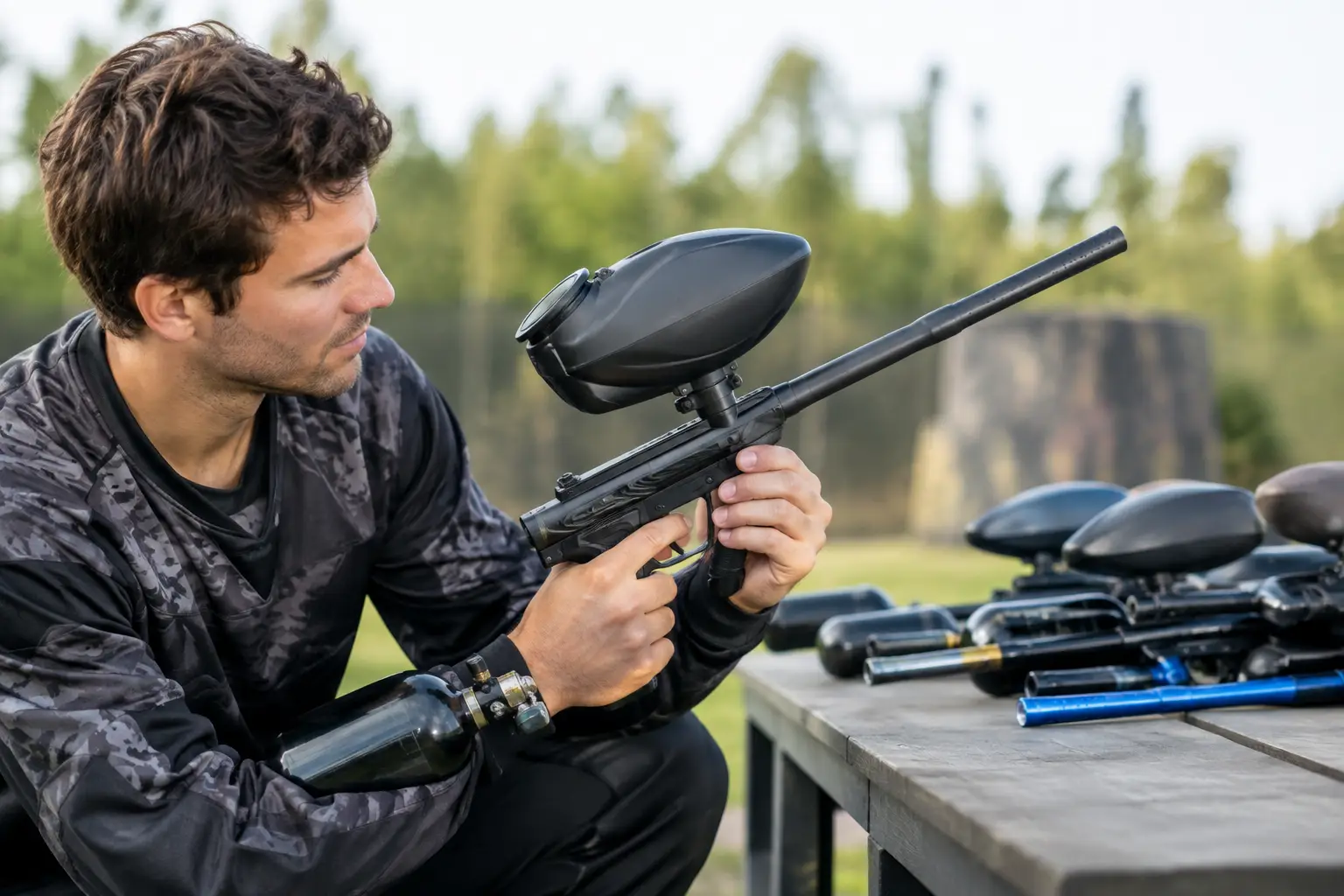
A paintball marker can make a first game feel exciting or frustrating fast. The right setup should be easy to carry, easy to operate, reliable through a full day of play, and matched to the way you actually play. For most players, choosing paintball markers is less about buying the most expensive model and more about getting the right combination of marker, air system, hopper, paint, and support.
A good pro shop conversation starts with a few honest questions: Where do you play? How often will you use the marker? Are you interested in woodsball, scenario games, speedball, or a little of everything? And just as important, what is your real budget after safety gear and air fills? Those answers matter more than flashy features on a box.
Start With Your Style of Play
The best marker for a casual group heading out a few times a year is not always the best marker for a player building a competitive setup. Marker choices should support the game you want to play now while leaving room to grow without forcing unnecessary upgrades.
For recreational and woodsball players, durability and simplicity often come first. A dependable mechanical marker is straightforward to learn, generally easier to maintain, and less demanding when it comes to batteries and electronics. These are practical choices for players who want to load paint, air up, and get into the game.
Scenario and tactical-minded players may place more value on ergonomics, stock compatibility, magazine-fed options, or a realistic platform. Those features can add to the experience, but they also bring trade-offs. Magazine-fed paintball setups usually carry fewer rounds between reloads and can require more attention to paint shape, magazine condition, and loading technique.
Speedball and tournament-focused players typically prioritize a fast, consistent, lightweight electronic marker. Electronic platforms can offer firing modes, refined triggers, and excellent efficiency, but they require responsible setup and regular care. If you are new to the sport, it is often smarter to learn fundamentals with reliable equipment than to spend heavily on features you will not use yet.
Mechanical vs. Electronic Paintball Markers
This is one of the biggest decisions buyers face, and neither answer is automatically better.
Mechanical paintball markers use a physical trigger system rather than a circuit board to cycle the marker. They are valued for their straightforward operation, solid reliability, and lower day-to-day complexity. Many experienced players still choose mechanical setups for woodsball, rec play, and mechanical tournament formats because they are enjoyable to shoot and easy to keep running.
Electronic paintball markers use a battery-powered board and solenoid to control firing. They can be smoother, faster, and more adjustable than many mechanical models. That performance comes with additional responsibilities: keep a fresh battery on hand, protect the electronics from moisture, understand the settings, and use a hopper that can feed paint quickly enough.
The deciding factor is usually not skill level alone. A player who values simple ownership may be happiest with a quality mechanical marker for years. A player who spends every weekend on an airball field may outgrow a basic setup quickly and benefit from an electronic platform. Buy for your habits, not someone else’s loadout.
Do Not Forget the Hopper
A marker can only shoot as consistently as it is fed. A basic gravity hopper may be fine for a low-rate mechanical setup, but it can struggle if you pull the trigger quickly. Missed feeds can cause chopped paint, inconsistent shots, and needless frustration.
Electronic markers and fast mechanical setups often benefit from an electronic loader. These hoppers actively feed paint into the marker, helping prevent gaps between shots. It is not always the most exciting item to buy, but it is one of the upgrades players notice immediately when their current hopper cannot keep up.
Choose the Right Air System
Most current paintball markers are designed around high-pressure air, commonly called HPA or compressed air. HPA systems are consistent, widely supported at paintball facilities, and suitable for the majority of modern marker platforms. Tank size and output pressure should match the marker and the player using it.
A smaller tank can be lighter and easier for younger players or anyone who prefers a compact setup. A larger tank gives more shots per fill and can better balance a longer marker, although it adds weight. The right tank should feel comfortable when you shoulder the marker, not force you into an awkward stance.
CO2 still has a place with certain compatible markers, but it is more sensitive to temperature changes and may not be appropriate for many electronic platforms. Never assume a marker can use CO2 just because a tank fits the threads. Check the manufacturer guidance or ask a knowledgeable technician before connecting any air source.
Tank safety deserves real attention. Use tanks within their hydrostatic test date, inspect the regulator and threads for damage, and never modify a tank or regulator yourself. Air systems store serious pressure. If something looks damaged, leaks, or feels questionable, have it checked before game day.
Reliability Beats a Long Upgrade List
It is easy to get pulled into barrels, triggers, grips, bolt kits, sights, and cosmetic accessories before the basic setup is sorted. Some upgrades make a genuine difference. Others solve a problem you may not actually have.
Start with a marker that is dependable, comfortable, and compatible with the paint and air system you plan to use. Then focus on the basics: a hopper that feeds correctly, a tank that fits your shoulder, quality paint, a barrel swab or squeegee, and proper protective gear. That setup will help you play better than a heavily accessorized marker that is poorly maintained.
Barrel upgrades are a good example. A quality barrel can improve handling and allow a better paint-to-barrel match, but it cannot fix poor paint, broken balls in the breach, or an improperly tuned marker. Paint quality and a clean barrel usually matter more than chasing a dramatic accuracy claim.
For electronic markers, tune only after you understand the manufacturer settings. Changing dwell, firing modes, or other adjustments without knowing their effects can create reliability problems, waste air, or put you out of compliance with field limits. Keep the marker set for safe, legal play and have its velocity checked with a chronograph before every game day.
What Beginners Should Budget For
A complete paintball setup is more than the marker. New players sometimes spend their entire budget on the marker, then discover they still need a mask, tank, hopper, paint, and basic maintenance supplies.
Your mask deserves priority. A good thermal lens helps resist fogging, fits securely, and gives you clear vision when the game gets active. Never remove your mask in an active playing area, and replace a lens that is badly scratched, cracked, or past its recommended service life. Clear vision and face protection are not optional upgrades.
Plan for paint, air fills, batteries if needed, and a small gear bag or case. If you are playing at an organized field, confirm its rules on marker velocity, firing modes, paint requirements, and air fills before you arrive. A marker that is ready at home still needs to meet the rules where you play.
Keep Your Marker Ready Between Games
Most reliability problems are preventable. After playing, remove the air source according to the marker’s instructions, unload paint, and clean visible paint from the breach, bolt area, and barrel. Wipe down the exterior rather than soaking the marker, especially around electronic grips and boards.
Use the correct lubricant and only where the manufacturer calls for it. Too much oil or grease can attract dirt and cause its own problems. Store the marker in a cool, dry location, and do not leave paintballs in the hopper or marker for long periods. Heat and humidity can swell paint, weaken shells, and turn a good day of play into a string of breaks.
When a marker leaks, cycles inconsistently, or will not fire, avoid forcing it. A damaged O-ring, dirty regulator, weak battery, or feeding issue may be simple to fix, but guessing can make a small repair larger. A shop with actual repair experience can diagnose the issue, source the right parts, and help you understand what caused it.
Get Advice That Stays Useful After the Sale
The best paintball marker is the one you can confidently maintain, safely operate, and enjoy using every time you play. That is why hands-on guidance matters. You should be able to hold different setups, compare their balance, ask whether an upgrade is worth the money, and get a straight answer.
At Combat Zone Sports, players can get help matching markers with compatible tanks, loaders, paint, and protective equipment, along with repair and upgrade support when a setup needs attention. Free lifetime maintenance on paintball markers also gives local players a practical reason to build their setup with long-term ownership in mind.
Before your next game, bring your current gear in, talk through how you play, and test the fit of a few options. The right marker should feel like a dependable piece of game-day equipment, not a project that keeps you on the sidelines.