A good airsoft protective gear checklist starts before you load a magazine or adjust your optic. BBs move fast, games get crowded, and the gear that looked optional in the staging area can become very necessary once you are moving through brush, barricades, and tight indoor lanes. Protection should fit your field’s rules, your style of play, and the Florida heat – not just the lowest price on the shelf.
The goal is not to wear every tactical accessory available. It is to cover the areas most likely to take a hit, make sure your gear stays in place, and avoid buying equipment that makes you miserable halfway through a game. Start with mandatory protection, then build outward based on where and how you play.
Airsoft Protective Gear Checklist: Start With Your Eyes
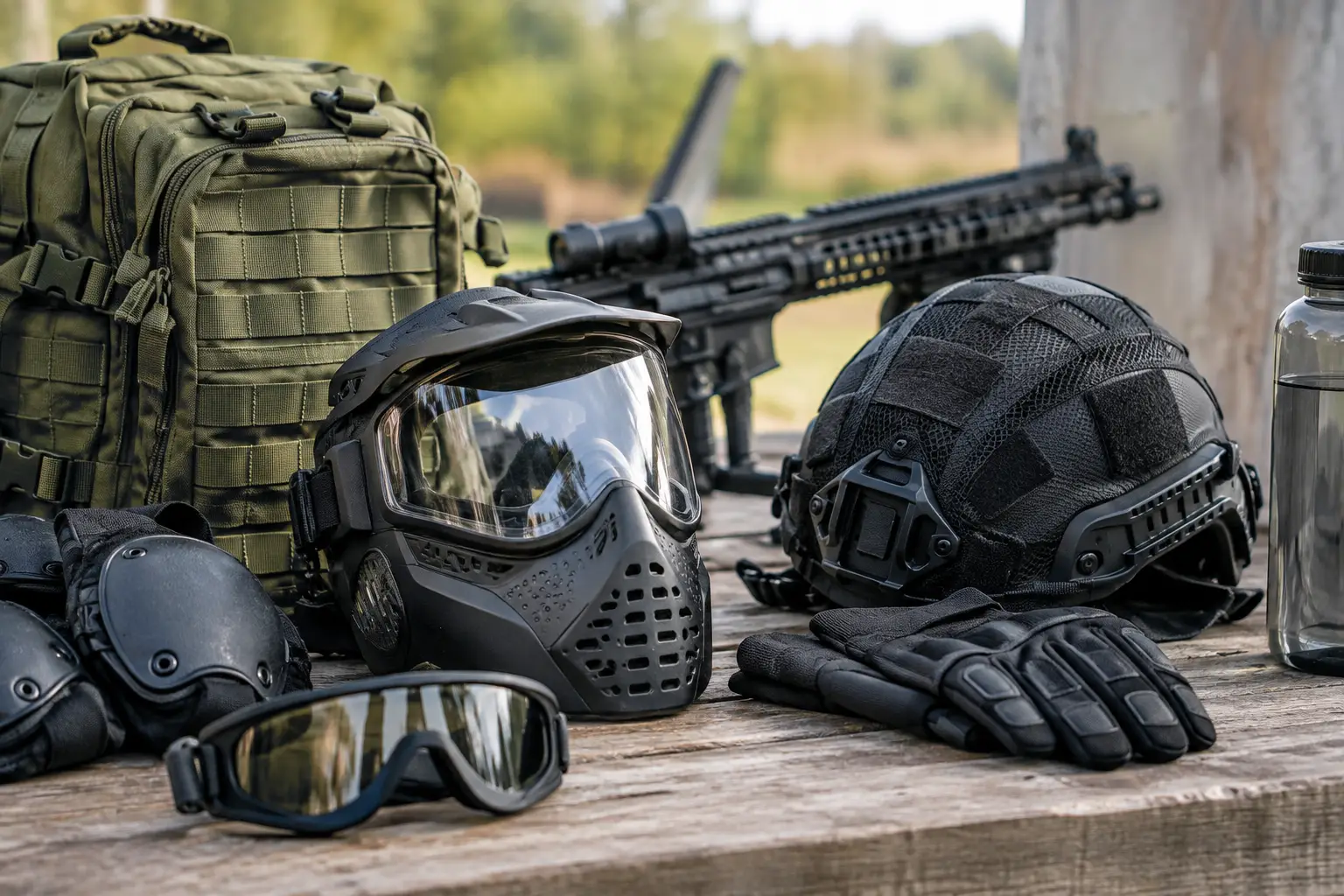
Eye protection is the one item you do not compromise on. Use full-seal goggles or a paintball-style mask that is rated for airsoft impact protection. Shooting glasses may be accepted at some outdoor fields, but only if they meet the field’s requirements and seal adequately around your eyes. A gap at the side, top, or bottom is a real problem when BBs can come in from unexpected angles.
Look for lenses with a recognized impact rating such as ANSI Z87.1+ or a rating specifically accepted by the field. Field rules always come first. If a field requires full-seal goggles, a pair of ballistic glasses is not a substitute, even if they are high quality.
Fit matters as much as the rating. Goggles should sit securely against your face without painful pressure points, and the strap should remain tight when you run, crouch, or shoulder your replica. Try them on with the hat, helmet, headset, or face protection you plan to use. A setup that fits perfectly by itself may not work once everything is layered together.
Fogging is the most common complaint, especially in Central Florida. Thermal lenses, proper ventilation, anti-fog treatment, and a clean microfiber cloth all help. Do not wipe a lens with a shirt sleeve or paper towel when it is dirty. Small scratches can build quickly and make glare worse. If you wear prescription glasses, test your goggles with them before game day or consider a compatible prescription insert.
Face and Mouth Protection Are Worth It
A hit to the cheek stings. A hit to the teeth can end your day and lead to a much more expensive problem. For most players, lower-face protection is a smart addition even when it is not required.
A full paintball mask offers the simplest all-in-one solution for beginners and close-range players. It protects the eyes, ears, nose, mouth, and much of the jawline without forcing you to assemble separate pieces. The trade-off is bulk. Some masks can make it harder to get a clean cheek weld on a rifle stock or use certain optics.
A separate lower mesh mask with goggles gives you more flexibility. Many players use a low-profile mesh mouth guard paired with fabric cheek panels, then shape it carefully for a better fit. Make sure the mesh cannot shift away from your teeth and that no sharp edge rubs your face. If you use a helmet or communications headset, test the complete setup together before the game.
Fabric face coverings and shemaghs can reduce the sting of a hit, but they do not protect teeth. Treat them as comfort layers, not hard protection.
Protect Your Head, Ears, and Neck Based on the Field
A helmet is not always required for airsoft, but it can be useful in wooded games, indoor fields with low obstacles, and scenarios where you may bump into structures while moving quickly. Bump-style helmets are popular because they provide a mounting point for lights, cameras, and hearing protection while adding a layer against scrapes and minor impacts.
Do not assume a replica helmet is rated for ballistic protection. For airsoft, that is usually not the point. Buy it for fit, accessory compatibility, and practical head coverage. A cap or boonie hat can be a cooler choice for outdoor games, but it will not protect the back or sides of your head the same way.
Ears deserve attention. They are sensitive, exposed, and easy to forget until a close hit lands there. Full masks cover them well. With goggles and a lower mask, use helmet-mounted ear covers, padded headwear, or dedicated ear protection that does not interfere with your eye pro.
A lightweight neck gaiter can protect against sun, brush, and direct hits. Avoid anything so loose that it catches on your sling, chest rig, or brush. In hot weather, breathable coverage is usually more useful than heavy fabric.
Gloves, Clothing, and Footwear Keep You in the Game
Hands are constantly exposed when you reload, work around cover, or brace your replica. Gloves are one of the best comfort purchases a player can make. Look for enough palm grip to handle magazines and controls, plus knuckle and finger coverage that suits your game. Full-finger gloves offer more protection; fingerless gloves offer more trigger feel and dexterity. For most players, full-finger gloves are the better all-around choice.
Avoid gloves that are too thick to manipulate a safety, magazine release, or small battery connector. This is especially relevant for players running AEGs with compact battery compartments or gas magazines that need frequent loading. Practice reloading and adjusting your gear while wearing the gloves you intend to play in.
Long sleeves and durable pants are not just for the look. They limit welts, protect against brush, and help keep dirt out of your skin when you go prone. Lightweight ripstop clothing works well in warm conditions, while layered clothing makes more sense during cooler months or longer night games. You do not need a matching uniform to be prepared. Comfortable clothes that allow you to move are more valuable than a costume that restricts your knees and shoulders.
For footwear, choose closed-toe shoes with traction and ankle support appropriate for the terrain. Hiking boots or supportive tactical boots are common for wooded fields, uneven ground, and long scenario games. Indoor players may prefer lighter shoes with a grippy sole. Brand-new boots can cause blisters, so break them in before a major event. Bring spare socks if rain, mud, or sweat are likely.
Knee Pads and Chest Protection: Use What Your Role Demands
Knee pads are not mandatory for every player, but they make a major difference if you kneel behind cover, play on hard surfaces, or spend time moving through gravel and roots. Integrated pads in tactical pants stay put well, while strap-on pads are easier to move between outfits. The best option is the one that does not slide down after ten minutes of running.
Chest rigs and plate carriers can provide some impact cushioning while carrying magazines, radios, hydration, and tools. Still, do not buy one only because it looks good in photos. A bulky carrier holds heat and can interfere with a natural shouldering position. For casual games, a simple chest rig or belt setup may be cooler and easier to manage.
Some players choose padded shirts or chest protectors for close-quarters games. That is a personal comfort decision unless the field requires it. Too much padding can reduce mobility and make hot days harder. Too little can make you hesitate when you need to move. Find the middle ground that lets you play confidently.
Check Compatibility Before You Leave Home
The most overlooked part of an airsoft protective gear checklist is checking the whole system, not each item separately. Put on your goggles, face protection, headwear, gloves, carrier, sling, and primary replica. Shoulder the replica from both sides. Look through your optic. Turn your head. Reload. Kneel. If something shifts, pinches, fogs, blocks your sight picture, or catches on another piece of gear, fix it before you are on the field.
Bring a small game-day support kit with lens cleaner, anti-fog treatment, spare batteries, water, a microfiber cloth, and basic tape or zip ties. Inspect goggles for cracks, damaged straps, loose foam, and deeply scratched lenses. Protective equipment wears out, and replacing it is cheaper than taking chances with questionable gear.
New players do not need to buy everything at once. Start with approved eye protection, real mouth coverage, gloves, and dependable footwear. Add a helmet, knee pads, better load-bearing gear, and specialty protection once you know whether you prefer outdoor woods games, indoor CQB, or longer milsim-style events.
If you are building your first setup or trying to make an existing kit work better, bring it to Combat Zone Sports. A quick in-person fit check can save you from buying gear that fights your goggles, blocks your optic, or never makes it out of the gear bag. The right protection should let you focus on the next move, not the last hit.