
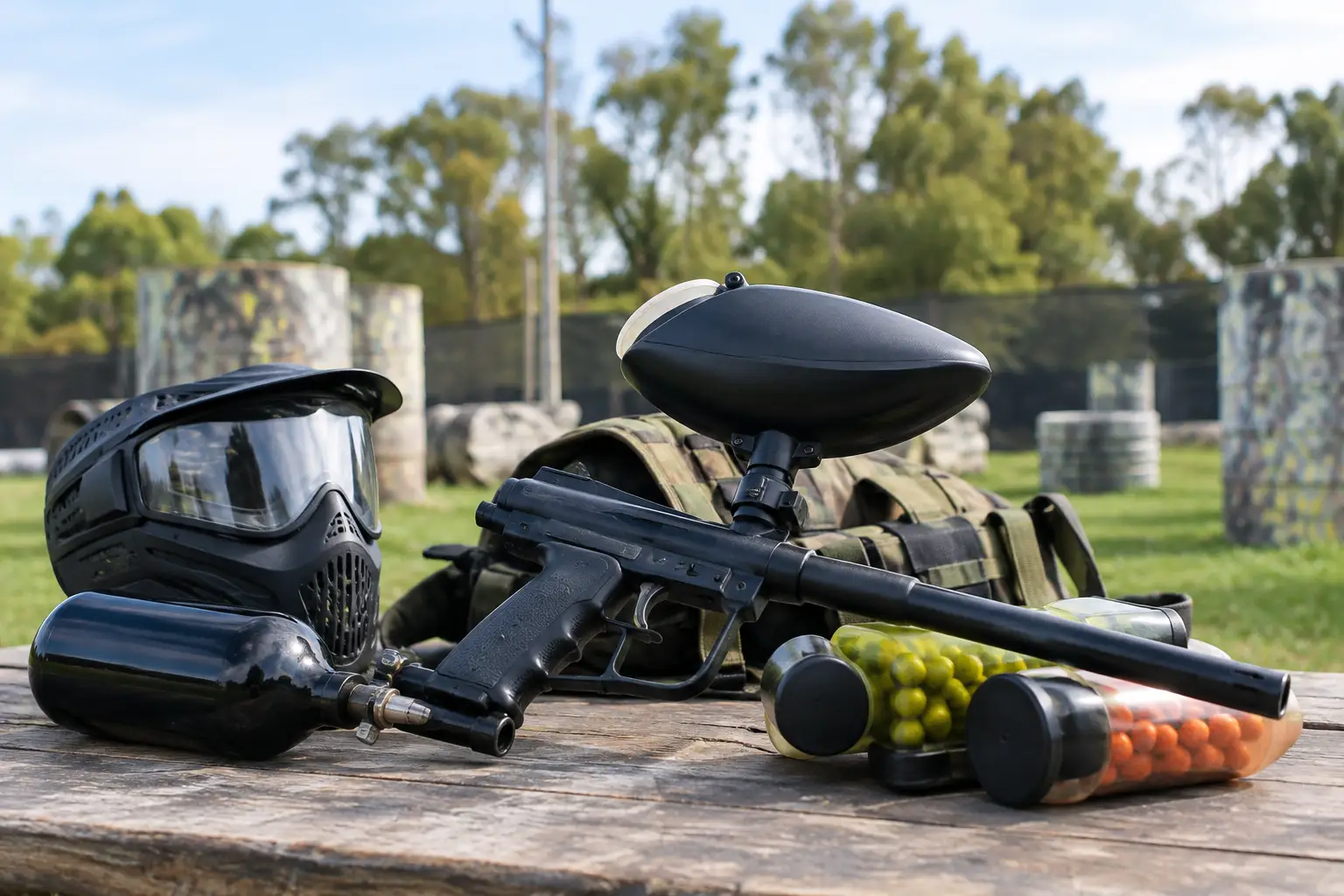
A bad mask can ruin a perfect day faster than a bad marker. If you cannot see through fogged lenses, your paint is breaking in the barrel, or your tank runs out before the next game, you are spending the day fixing gear instead of playing. This Melbourne paintball equipment guide focuses on buying the right equipment in the right order, whether you are joining your first walk-on game or replacing a rental setup with gear you can rely on.
The goal is not to buy the most expensive item on the wall. It is to build a safe, field-legal setup that fits how often you play, the style of games you enjoy, and the budget you want to keep for paintballs and entry fees.
Start With Safety, Then Buy Performance
Your first personal purchase should usually be a quality paintball mask. Markers get the attention, but a comfortable thermal-lens mask makes a bigger difference to a new player’s day. It protects your eyes and face, stays clearer during Florida heat and humidity, and lets you focus on movement rather than constantly wiping a lens.
Look for a mask designed specifically for paintball, with a dual-pane thermal lens and secure retention strap. Try it on before buying when possible. A mask that creates pressure points around your forehead or leaves your lower face exposed will become annoying after a few games. Make sure it works with glasses if you wear them, and never substitute shop goggles, airsoft eye protection, or a single-pane lens for a paintball-rated mask.
Keep your lens clean with microfiber only. Paper towels, shirt sleeves, and rough cloth can scratch it. Replace a damaged, deeply scratched, or compromised lens instead of trying to stretch its life. Visibility is safety equipment, not an accessory.
Choosing a Paintball Marker That Matches Your Play
For most recreational players, a dependable mechanical marker is the smart place to start. Mechanical markers are generally simple to operate, easier to maintain, and less sensitive to battery issues or electronic settings. They are a great fit for weekend woodsball, casual speedball, and players who want to learn basic maintenance without constantly tuning their gear.
Electronic markers can offer faster firing modes, more adjustability, and a lighter, more refined shot on some platforms. They also add cost and require more attention to batteries, settings, cleaning, and field rules. If you play frequently or expect to move toward competitive speedball, an electronic setup may make sense. If you play a handful of times each year, a reliable mechanical marker and good mask will often serve you better.
Before choosing a marker, ask practical questions. Does your local field limit velocity to a specific feet-per-second range? Does it require a particular firing mode? Are you playing mostly open speedball fields, wooded fields, or scenario events? A compact setup can be useful in tight games, while a longer, stock-capable configuration may suit players who prefer woodsball. Neither choice is automatically better.
Do not let a long list of upgrades decide the purchase. A marker should first shoot consistently, be easy to service, and accept readily available parts and air systems. Start with a setup you can run confidently. Upgrade after you have enough game time to identify what actually needs to change.
Marker essentials that are worth the money
A few additions improve function without turning a first setup into a project. You will want a reliable hopper, a quality barrel swab or squeegee, approved paintball lubricant if your marker calls for it, and a protective barrel cover for use off the field. Those are not glamorous purchases, but they prevent common game-day problems.
A hopper matters more as your rate of fire goes up. Gravity-fed hoppers can work well for casual mechanical play, but they may struggle if you shoot quickly or use an electronic marker. A powered loader feeds more consistently and helps prevent chopped paint. Match the loader to the marker and the way you play rather than buying the fastest model available.
Air Systems: HPA vs. CO2
Your air tank is part of the marker system, not a generic add-on. High-pressure air, often called HPA or compressed air, is the standard choice for many current paintball markers because it provides stable pressure and works well across changing temperatures. It is especially practical in Central Florida, where heat can make CO2 performance less predictable.
CO2 tanks remain usable for certain markers and fields, but they are not compatible with every platform. CO2 pressure changes with temperature and can be harder on markers not designed for it. Check your marker manual and field filling options before investing in a tank. Never assume a tank that threads on is the right tank for the marker.
Tank size is a trade-off between air capacity, weight, and balance. A larger tank usually provides more shots, but it can make the setup longer and heavier. Smaller tanks are easier for younger players or anyone who prefers a compact marker. Try shouldering the marker with the tank installed. If the setup feels awkward, it will be harder to aim consistently through a full day.
Every compressed-air tank has a hydrostatic test date. Do not use an out-of-date tank, damaged bottle, or regulator with obvious leaks or impact damage. Field staff and qualified technicians should handle fills and inspect questionable equipment. Never leave a pressurized tank in a hot car.
Paintballs, Barrels, and the Truth About Accuracy
Paint quality has a major effect on how your marker performs. Fresh, round paintballs stored properly are less likely to break in the barrel and tend to fly more consistently. Cheap or poorly stored paint can turn a good marker into a frustrating one.
Buy paint that your field allows. Many fields require field paint, especially at organized games, to protect their insurance requirements and control paint quality. Store paint in a cool, dry place, away from direct sun and extreme heat. Rotate the boxes or bags occasionally, but do not shake them aggressively.
Barrel upgrades can help with sound, length preference, and paint-to-barrel match, but they are often oversold as a cure for inaccurate shooting. Paintball accuracy depends heavily on paint quality, clean equipment, proper velocity, and consistent air supply. A clean stock barrel will outperform an expensive barrel full of broken paint. If you eventually choose a barrel system, buy it because you understand the fit and maintenance involved, not because the package promises laser-like accuracy.
Build Your Melbourne Paintball Equipment Kit in Order
For a new player, spending in the right sequence prevents a lot of buyer’s remorse. Build around safety and reliability before cosmetic parts. A practical first kit includes these essentials:
- A paintball-rated thermal mask with replacement lenses available
- A reliable marker that matches your field rules and playing style
- The correct HPA or CO2 tank for that marker
- A hopper suited to your marker’s feed rate
- A barrel cover, microfiber cloth, barrel swab, and basic maintenance supplies
- Paintball clothing with sturdy footwear, plus gloves and knee protection if your field style calls for them
Wear clothing you can move in and do not mind getting paint on. Long sleeves, pants, and closed-toe shoes are a solid starting point. Cleats can help on some surfaces, but verify that your field permits them and avoid metal spikes. Gloves reduce hand impacts, while knee pads are worthwhile for players who slide, kneel, or play on hard ground.
A pod pack becomes useful once you start carrying extra paint during games. Do not buy the biggest pack by default. More pods mean more weight and more paint to manage. Two or three pods may be plenty for casual play, while tournament-style players may need more capacity.
Maintenance Keeps Game Day From Becoming Repair Day
Clean your marker after each day of play, especially if paint broke inside it. Remove the air source, follow the manufacturer’s safe degassing procedure, and wipe down the exterior. Clean the barrel and hopper, inspect O-rings and detents where applicable, and use only the lubricant recommended for your marker.
Do not troubleshoot by randomly tightening screws or changing every setting at once. Leaks, chopping, inconsistent velocity, and poor feeding usually have specific causes. Start with fresh batteries where applicable, clean paint, correct lubrication, and a properly maintained tank. If the problem continues, let a knowledgeable tech inspect it before a small issue becomes a damaged solenoid, stripped fitting, or unsafe setup.
Experienced players should also keep a small field bag with spare batteries, a microfiber cloth, barrel swab, approved lubricant, Allen keys, and a few common spare parts for their specific marker. Bring only what you know how to use. A bag full of random fittings is not a repair plan.
Get Advice Before You Upgrade
The best upgrade is the one that solves a problem you actually have. If your mask fogs, fix your mask before buying a trigger. If paint breaks, check paint condition, barrel cleanliness, hopper performance, and marker maintenance before shopping for a new barrel kit. If your marker feels unreliable, a professional service may be a better investment than a new accessory.
Players around Melbourne have plenty of reasons to visit a pro shop before their next game: trying on masks, confirming tank compatibility, getting a marker repaired, or simply avoiding a purchase that will not work together. Combat Zone Sports has supported paintball players since 2003 with honest equipment guidance, repairs, upgrades, and ongoing marker maintenance.
Buy the gear that gets you on the field safely, keep it clean, and give yourself time to learn what your game actually demands. The right setup is not the one with the most accessories. It is the one you trust when the countdown starts.