
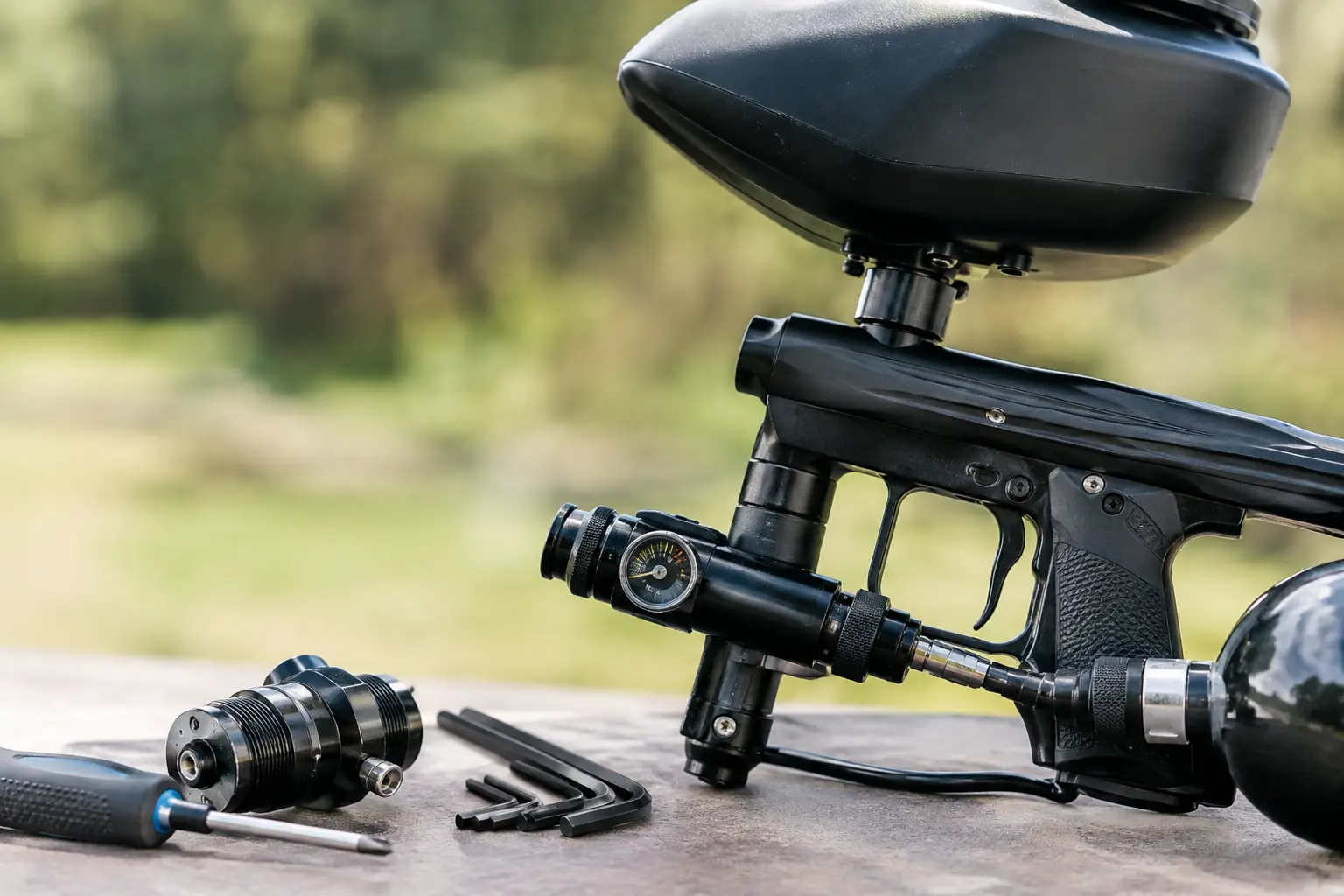
A marker that suddenly starts hissing, shoots inconsistently, or refuses to cycle can ruin a game day fast. Many paintball regulator failures start small – a slow leak, an occasional velocity drop, or a gauge that does not behave normally – then become a bigger reliability or safety issue when ignored. The good news is that symptoms usually point toward a manageable problem, as long as you know which parts should be left alone.
What a paintball regulator actually does
Your marker needs air delivered at a controlled pressure. The tank regulator reduces the high pressure stored in an HPA cylinder to an output pressure the marker can use. Many markers also have an inline regulator that further controls pressure before air reaches the valve.
That means the word “regulator” can describe two different parts with different risks. A marker’s inline regulator is often a serviceable component when handled correctly. An HPA tank regulator is a high-pressure assembly attached to a pressure vessel. It is not a casual home-repair project. If the issue is at the tank regulator, stop using the air system and have a qualified paintball technician inspect it.
CO2 setups add another wrinkle. Cold weather, rapid firing, and a tank tipped at the wrong angle can send liquid CO2 into the marker, causing dramatic pressure changes and frosting. That can look like a regulator problem even when the regulator itself is fine. The fix may be setup, operating conditions, or a CO2-specific maintenance issue rather than replacing parts.
Common paintball regulator failures and their symptoms
A steady leak is the symptom players notice most. Where it leaks matters. A hiss at the tank-to-marker connection can be as simple as a worn tank O-ring. A leak from a marker regulator’s adjustment area, gauge port, or lower cap can point to an internal O-ring, damaged seat, debris, or an incorrectly assembled regulator.
Pressure creep is another common problem. This happens when the regulator allows pressure to slowly rise above its set point after the marker sits pressurized. You may hear a brief burst from a safety valve, see velocity climb during a chrono check, or find that the marker fires differently after sitting between points. A worn regulator seat is often involved, but contamination and damaged sealing surfaces can create the same result.
Inconsistent velocity can come from a regulator, but do not assume it always does. Paint quality, barrel debris, bolt wear, poor battery voltage on an electronic marker, temperature, and a nearly empty tank can all affect consistency. Chronograph the marker with good paint before deciding the regulator is the culprit. A few feet per second of variation may be normal for the marker and conditions. Wide, repeated swings are worth investigating.
Other warning signs include a gauge that jumps unexpectedly, a marker that cycles weakly, a sudden change in shot sound, or a regulator adjustment that no longer produces predictable results. If you smell anything unusual, see damaged threads, notice a bulge, or hear air venting from the tank regulator, do not keep troubleshooting at the field. Degas the marker safely if possible, remove it from play, and bring it in.
Why regulators fail
Regulators work through precise sealing surfaces, springs, pistons, and O-rings. Dirt from a contaminated fill source, moisture, old lubricant, paint residue, or damaged threads can interfere with those parts. Even a tiny piece of debris can keep a seat from sealing correctly.
Normal wear matters too. O-rings flatten and harden over time. Regulator seats wear with use. Springs can fatigue, and adjustment screws can be damaged by forcing them past their intended range. Florida heat, long periods of storage, and a marker left pressurized for months can all make existing seal issues show up sooner.
The wrong lubricant is another avoidable cause. Use only the lubricant recommended for your specific marker and regulator. Random household oils, heavy grease, and products not intended for paintball air systems can swell seals, collect debris, or cause other problems. Never add oil to an HPA tank regulator or fill nipple unless the manufacturer specifically calls for a qualified procedure.
How to narrow down the problem safely
Start with the simple checks. Make sure the tank is adequately filled and the marker has fresh, properly sized paint. Inspect the tank O-ring at the ASA connection. If it is nicked, flattened, or missing, replace that inexpensive part before assuming the regulator has failed.
Next, listen closely as you air up the marker. A leak at the ASA is different from a leak around the grip frame, inline regulator, bolt area, or barrel. Do not put your face near the leak and do not use your hand to search around a high-pressure air system. A small amount of soapy water applied carefully to suspected external joints can reveal bubbles, but keep moisture away from electronics and do not spray it into openings.
Chronograph several shots after the marker has stabilized. Then let it sit pressurized briefly and chrono again. A meaningful increase after sitting may suggest pressure creep. If the marker has an adjustable inline regulator, record the current setting before changing anything. Turning adjustment screws at random can make diagnosis harder and may take the marker outside its safe operating range.
If you own multiple tanks, testing with a known-good tank can help isolate the issue. Likewise, a known-good marker can reveal whether the tank is the source. This is useful information, but it does not make a tank regulator safe to disassemble. Treat the tank and its regulator as one high-pressure system.
Repairs that should not be a DIY experiment
Replacing an accessible tank O-ring is normal player maintenance. Cleaning a marker according to its manual and rebuilding an inline regulator with the correct kit can also be reasonable for an experienced owner. The trade-off is simple: a careful rebuild can save time and money, while a rushed rebuild can create a new leak, damage threads, or mask the real problem.
Tank regulator work is different. Never attempt to remove, disassemble, modify, or defeat safety components on an HPA tank regulator. Do not use damaged tanks, tanks with questionable threads, or tanks that are past their hydrostatic test date. A regulator issue can sometimes be repaired, but the tank must be evaluated by someone with the right tools, parts, and experience.
At Combat Zone Sports, players can bring in a marker for an honest inspection instead of buying parts based on a guess. For Central Florida players, that can mean the difference between a quick O-ring or regulator service and spending money on an upgrade that was never needed.
Preventing regulator trouble before game day
Regulators last longer when the rest of the air system is treated well. Keep the fill nipple and tank threads clean, use reputable fill sources, and keep a barrel cover on whenever the marker is not being fired. Avoid dropping tanks or using the tank as a handle to carry the marker. A hard impact can damage threads, gauges, or internal parts even if the outside looks fine.
Store markers clean and dry. If you will not be playing for an extended period, follow your marker manufacturer’s storage guidance rather than leaving it pressurized indefinitely. Before a big weekend, air up the marker, check for leaks, fire a few shots, and chrono it. Finding a weak seal in the shop or garage beats finding it while your group is waiting at the staging area.
A regulator is not the flashy part of a paintball setup, but it decides whether your marker gets dependable air every time you pull the trigger. Pay attention to early symptoms, avoid risky shortcuts around HPA tanks, and get a knowledgeable set of eyes on anything that does not sound, seal, or chrono the way it should.