
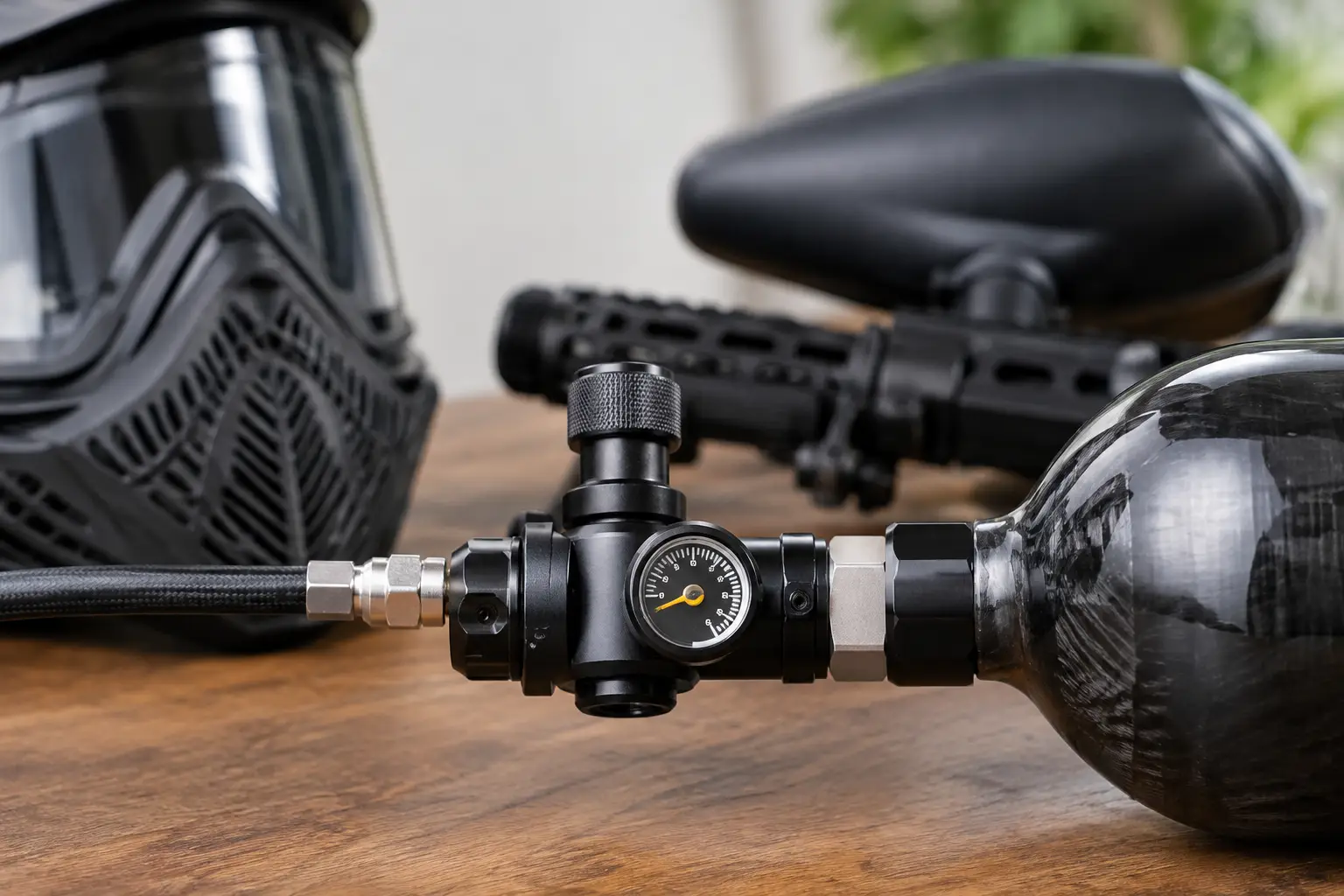
A full HPA tank can hold far more pressure than your marker or airsoft engine can use. The regulator is the small but critical part that makes that stored air usable. This HPA regulator guide breaks down what it does, how to choose one, and why a bad match between tank, regulator, line, and gun can ruin a game day or damage equipment.
For a first HPA setup, the right answer is rarely the most expensive part on the wall. It is the regulator that delivers the pressure your equipment actually needs, works with your tank and fill source, and can be adjusted safely when adjustment is required.
What an HPA regulator actually does
An HPA tank stores compressed air at high pressure. Most filled tanks are rated for 3,000 psi or 4,500 psi, depending on the tank. Your paintball marker, HPA airsoft engine, or HPA-powered replica does not receive that full tank pressure. The tank regulator reduces it to an output pressure that the downstream system can handle.
Think of the tank as the fuel supply and the regulator as the gatekeeper. It provides a controlled output as the tank empties, allowing your marker or engine to cycle consistently. A regulator that is dirty, damaged, incorrectly adjusted, or incompatible with the setup can cause inconsistent velocity, leaks, poor cycling, and unnecessary wear.
There are two pressure stages to understand. The regulator attached to the tank provides the first reduction in pressure. Many HPA airsoft systems also use a secondary regulator between the air line and the gun. That secondary regulator gives the player fine control over the pressure sent to the engine. Most paintball markers run directly from a tank regulator, although certain mechanical or specialty setups may have their own requirements.
HPA regulator guide: start with your equipment
Before choosing a tank regulator, check the manual for the marker, engine, or replica you plan to run. Manufacturer specifications should always beat forum guesses. The most common question is whether a setup needs high-pressure or low-pressure output.
Paintball marker requirements
Many modern paintball markers are designed around a standard high-pressure air output, commonly around 800 psi. However, “high pressure” in this context is the tank regulator output, not the tank’s full fill pressure. Some markers are designed for lower input pressure, and many advanced electronic markers have internal regulators that further reduce pressure before it reaches the valve.
A standard preset tank regulator is the practical choice for many recreational paintball players. It is simple, dependable, and harder to accidentally set outside the marker’s preferred range. If you own a marker with a specific low-pressure requirement, follow that manufacturer guidance rather than assuming every screw-in tank is interchangeable.
HPA airsoft engine requirements
HPA airsoft systems are different. An engine generally runs at much lower pressure than a paintball marker’s direct tank input. That is why most airsoft HPA builds use a tank regulator plus a dedicated secondary regulator and line. The tank regulator supplies air to the line, while the secondary regulator is adjusted to the engine manufacturer’s recommended operating range.
Do not connect an airsoft engine directly to a standard paintball tank output unless the system specifically calls for it. Too much pressure can damage internal components and create an unsafe condition. A quality secondary regulator with a clear gauge and reliable adjustment is not an optional cosmetic upgrade. It is part of the system’s safety and performance.
Preset versus adjustable tank regulators
Preset regulators deliver one factory-set output pressure. They are the straightforward option for players who want a reliable screw-in air tank for a compatible paintball marker. Less adjustment means less opportunity to make a mistake.
Adjustable tank regulators allow the output pressure to be changed within a stated range. They can be useful for certain markers, specialized builds, and experienced players who understand the system requirements. They also demand more care. Adjusting output pressure without knowing what the gun is rated for is a quick way to chase problems that were not there before.
For airsoft, the adjustment you use during normal setup is usually on the secondary regulator, not the tank regulator. That arrangement keeps the tank side stable while giving you controlled tuning at the gun. It also makes troubleshooting easier because each part has a clear job.
Tank threads, lines, and fittings matter
A regulator can be perfectly good and still fail to work with your gear because of a connection problem. Most paintball tanks use standard ASA threads, but the rest of the setup deserves the same attention. Remote lines, airsoft braided lines, quick-disconnect fittings, and remote adapters must be rated for the pressures involved and installed correctly.
Never force threads that do not start smoothly by hand. Cross-threading a tank regulator or ASA can turn a small compatibility issue into an expensive repair. Inspect O-rings before connecting a tank, and replace damaged ones instead of trying to make them last one more weekend.
For HPA airsoft, check the quick-disconnect style used by your engine’s line and regulator. Two fittings may look nearly identical while using different standards. A connection that does not fully seat can leak, separate under pressure, or restrict airflow. When in doubt, bring the gun, line, and tank setup to the shop so the components can be checked together.
Output pressure is not the same as velocity
Players sometimes adjust pressure to solve a chrono problem without checking the rest of the setup. Pressure affects how an HPA system operates, but velocity also depends on barrel length, bore, hop-up condition, BB weight, paint and barrel match, dwell settings, valve condition, and mechanical timing.
For airsoft engines, raise pressure only in small increments, then chrono with the BB weight required by the field. If the engine has electronic settings, follow the engine maker’s guidance for dwell and other tuning values before using pressure as the only fix. A stable, field-legal setup is better than a high number that varies shot to shot.
For paintball, pressure issues can show up as velocity swings, bolt problems, leaks, or weak cycling. But those symptoms can also come from worn seals, a dirty regulator, old batteries, poor paint-to-barrel fit, or a marker that needs service. Guessing at tank pressure is not a substitute for a proper inspection.
Safe filling and handling habits
HPA is safe when the equipment is in good condition and handled correctly, but compressed air deserves respect. Use tanks within their hydrostatic test date, and do not fill a tank that is visibly damaged, heavily corroded, or has damaged threads. A tank’s hydro date is not a suggestion. It is part of knowing whether the cylinder is approved for service.
Use a fill station designed for the tank and follow its procedures. Open valves slowly, keep your hands away from the burst disk area, and stop if you hear a persistent leak or see damaged hardware. Never use oil or petroleum-based lubricants on high-pressure air equipment unless the manufacturer specifically approves the product.
Heat is another common problem in Florida. Do not leave an HPA tank in a hot car for hours, especially in direct sun. Tank pressure rises with temperature, and the safest storage spot is a cool, dry place where the tank cannot roll around or take an impact.
Signs your regulator needs attention
A sudden leak from the fill nipple, gauge, burst disk, or tank-to-marker connection deserves attention before the next game. So do major output inconsistencies, a gauge that behaves strangely, physical impact damage, or regulator threads that feel rough. Do not disassemble a tank regulator casually. These parts contain high-pressure air and often require proper tools, replacement parts, and experience.
Basic care is simple: keep the threads clean, protect the regulator from drops, replace external O-rings when needed, and drain tanks only according to the tank and regulator manufacturer’s instructions. If a marker or HPA build starts acting differently after a tank change, isolate the issue. Try a known-good tank, inspect the line and fittings, then check the gun-side regulator or engine.
A good HPA setup should feel boring in the best way: it airs up without drama, shoots consistently, and passes chrono without last-minute surprises. If you are building your first airsoft HPA rig or sorting out a paintball air problem, Combat Zone Sports can help match the tank, regulator, fittings, and service needs before a small mismatch becomes a wasted day at the field.