
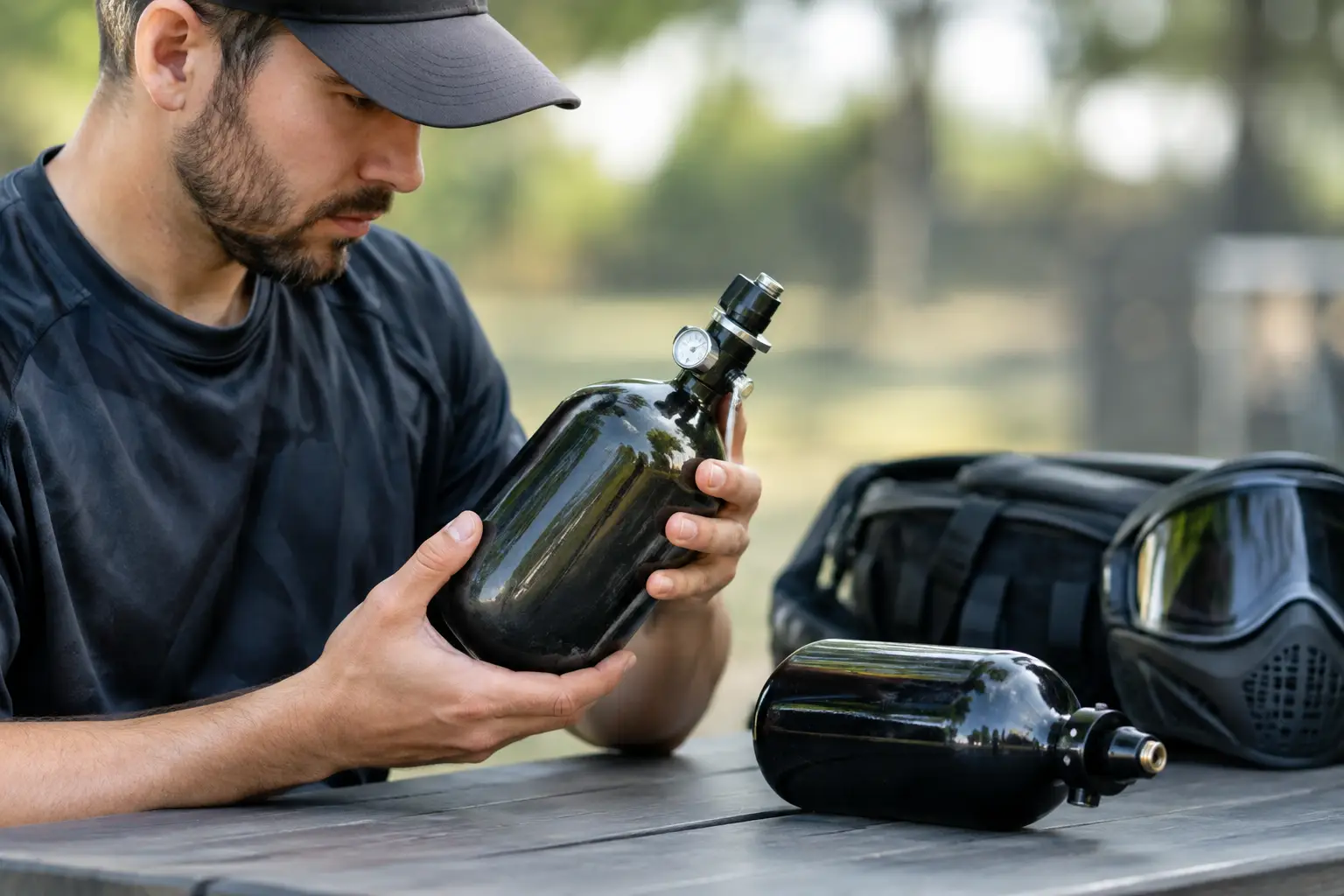
A tank can look fine in your gear bag and still cause a bad day at the field. A slow leak, damaged regulator threads, or an expired hydro date can stop your paintball marker or HPA airsoft setup before the first game. Knowing how to inspect HPA tanks is not complicated, but it does require more than a quick glance at the gauge.
A good inspection starts before you leave home, especially if the tank has been rolling around in a car, stored in a hot garage, or used hard during the last event. HPA systems hold serious pressure. Treat the bottle and regulator like safety equipment, because that is exactly what they are.
Start With the Hydro Test Date
Check the label or stamp on the bottle before anything else. Most HPA tanks used for paintball and airsoft are DOT-regulated cylinders that require periodic hydrostatic testing. In many cases, the retest interval is five years, but the bottle markings and applicable DOT requirements are what count.
Look for the original manufacture date and any later hydro test dates. A date commonly appears in month-year format, such as 06-24. If the tank is out of date, do not fill it, even if it still holds air and the regulator appears normal. Fields and fill stations may refuse it, and for good reason.
Do not confuse the regulator’s manufacturing information with the bottle’s hydro information. The cylinder is the part that needs to be within its test interval. If you cannot clearly read the label or stamp, have a qualified air-system technician inspect it before attempting a fill.
Inspect the Bottle From Top to Bottom and if you are not sure a shop like Combat Zone Sports in Cocoa Fl and inspect and inform you on what you should do with your system.
Empty or nearly empty is the safest condition for a close inspection. You do not need to remove a regulator from the bottle to look it over. In fact, unless you are trained and equipped to service high-pressure air systems, leave the regulator installed.
Wipe dirt, paint, and moisture off the tank so you can see the surface clearly. Then rotate the bottle slowly under good light. On an aluminum tank, watch for deep dents, heavy gouges, corrosion, and damaged threads at the neck. Cosmetic scuffs happen. A dent you can feel with your fingernail, a sharp gouge, or corrosion that has eaten into the metal is a different situation.
Composite-wrapped tanks need even more attention. The fiber wrap is part of the cylinder’s structure, not just a finish. Light surface marks in the clear coating may be harmless, but cuts, fraying, deep scratches, bubbling, soft spots, lifting layers, or exposed fibers are reasons to stop using the tank until a qualified professional evaluates it. Never sand, paint over, tape over, or try to “repair” a damaged carbon-fiber bottle yourself.
Pay close attention to the area near the tank neck and the bottom of the bottle. Tank covers can hide trouble, including moisture, grit, and impact damage. Take the cover off periodically rather than assuming the bottle underneath is clean.
What Counts as Normal Wear?
A used HPA tank does not need to look brand new. Minor exterior scratches, faded labels, and small marks on a protective cover are common. The line is crossed when damage affects the bottle material, the fiber wrap, the neck threads, or your ability to confirm the tank’s identification and hydro date.
When you are unsure, do not gamble on a judgment call from a photo or a friend’s guess. Bring it to a pro shop that works with air systems. Replacing a questionable tank is cheaper than dealing with an unsafe failure.
Check the Regulator, Gauge, and Threads
Next, inspect the regulator body where it meets the tank. It should sit squarely and securely, with no obvious gap, wobble, bent parts, or signs that the bottle has been cross-threaded. Do not try to tighten or remove the regulator with ordinary tools. HPA regulators are installed with specific procedures and torque requirements.
Look at the fill nipple. Its cap should be present and the nipple should be clean, not packed with field dirt or dried paint. The cap is small, but it helps keep contamination out of the fill connection. A damaged or missing cap is easy to replace; a contaminated fill nipple can create a bigger problem.
Inspect the burst disks on the regulator as well. These are safety devices, not screws to adjust. If a burst disk is missing, dented, corroded, or venting air, stop using the system. Do not substitute a random disk or install a different pressure rating because it is what you have in your gear bag.
Check the gauge face and lens. A cracked lens, loose gauge, fogged face, or needle that does not move consistently deserves attention. The gauge tells you tank pressure, but it is not a precision diagnostic tool. Use it to confirm whether the tank is holding pressure and whether pressure drops unexpectedly between games.
Finally, examine the output threads that screw into your marker’s ASA or airsoft adapter. They should be clean and undamaged. A cross-threaded regulator can ruin the mating threads in your setup and may prevent the tank from sealing correctly.
Listen and Test for Leaks Safely
Once the visual inspection looks good, connect the tank to your marker or airsoft HPA setup in a clear area, with the muzzle pointed safely and the system handled according to your field’s rules. Screw the tank in smoothly. If it takes excessive force, back it out and inspect the threads rather than forcing it.
A brief chirp while the system pressurizes can happen on some setups. Constant hissing is not normal. Listen around the ASA connection, regulator, fill nipple, gauge, and air line fittings. If you hear a leak, degas the system safely and isolate the source before playing.
A simple soap-and-water solution can help find a slow external leak. Apply a small amount to the suspected area, avoiding areas where liquid could enter the fill nipple. Growing bubbles indicate escaping air. Wipe the solution off afterward and keep water away from the tank interior and regulator openings.
Do not chase leaks on a pressurized regulator by removing gauges, burst disks, or fittings. High-pressure air can release violently. Many leaks are caused by a worn tank O-ring at the ASA connection, which is a common and inexpensive fix. Regulator leaks, burst-disk leaks, or leaks at the bottle-to-regulator connection require proper service.
Inspect Your Tank Before Every Fill
A full inspection does not have to be a big production every game day. Build a quick routine before you head to the fill station: verify the hydro date, check the bottle for new damage, make sure the fill nipple is clean and capped, and confirm the regulator is not leaking.
After a hard fall, a rollover in a vehicle, or a direct impact against a bunker or staging-table edge, inspect the tank again. Carbon-fiber tanks are durable, but they are not immune to impact damage. The same goes for aluminum bottles that get dented or heavily scraped.
Storage habits matter too. Keep tanks away from direct Florida heat, do not leave them unsecured in a vehicle, and avoid storing them where they can fall from shelves. Use a tank cover for protection during play, but do not let that cover replace regular inspections. Keep the regulator protected from dirt and avoid dragging the bottle by the regulator.
Know When to Stop Using an HPA Tank
Take a tank out of service if it is past hydro, has deep damage, exposed composite fibers, questionable neck threads, a leaking regulator, a damaged burst disk, or an unreadable identification label. “It worked last weekend” is not a safety inspection.
For players around Cocoa, Melbourne, Orlando, and the rest of Central Florida, bringing a questionable air system to Combat Zone Sports is a practical move before your next game. A knowledgeable set of eyes can help you determine whether you need a simple O-ring, regulator service, a hydro test, or a replacement tank.
Your HPA tank should be the quiet, dependable part of your loadout. Give it a minute of attention before each game day, and you can spend more time playing instead of standing at the staging area with an empty marker and a preventable problem.