
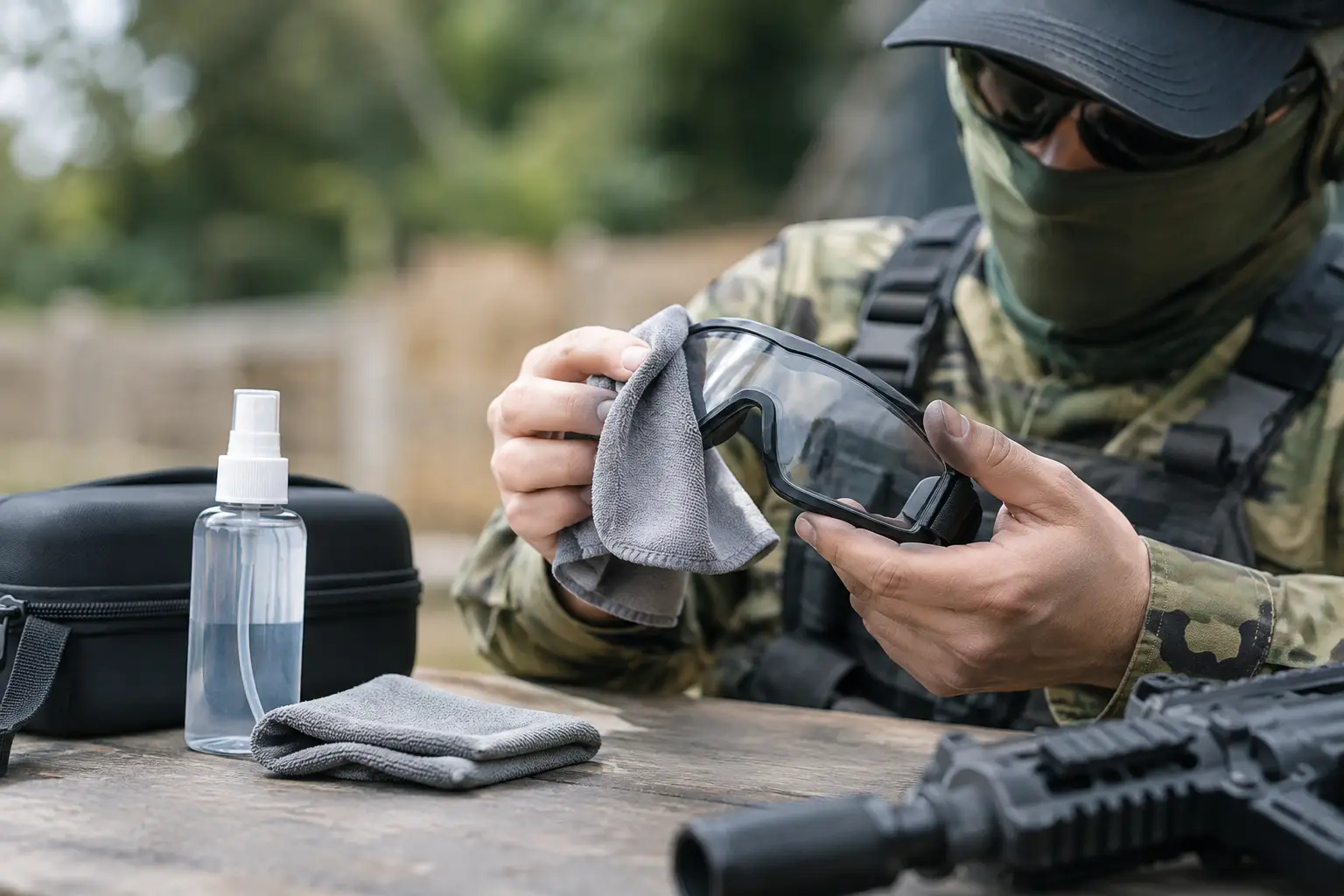
A fogged lens can turn a good airsoft game into a safety problem fast. You cannot track movement, confirm targets, or safely move through cover when your eye protection clouds over. Learning how to prevent airsoft fogging starts with one hard rule: never remove approved eye protection during a game just to clear your vision. Fix the cause before the next round instead.
Florida heat and humidity make fogging especially common, but the same issues show up anywhere players sweat hard, wear lower-face protection, and move between air-conditioned spaces and warm outdoor fields. The goal is simple: keep moist air from building up on the inside of your lenses while keeping your protection secure and field-legal.
Why airsoft goggles fog in the first place
Fog is condensation. Warm, humid air from your face meets a lens surface that is cooler than that air, and moisture forms tiny droplets. Those droplets scatter light and give you that milky, blurry view.
Your body heat, sweat, breathing, face covering, and the local weather all add moisture inside your goggles. A sealed goggle with little airflow can trap it. A mask that directs every exhale upward can make it worse. Even a high-quality thermal lens can fog if it is dirty, damaged, or overwhelmed by enough humidity.
The fix is rarely one magic product. Most players get the best results by combining proper eyewear, better airflow, clean lenses, and a face-protection setup that does not send breath straight into the goggles.
How to prevent airsoft fogging with the right eyewear
Start with eye protection made for airsoft, not shop glasses, skiing, or costume use. Use goggles or full-seal eye protection that meet the safety standard required by your field. Lens safety comes first, and anti-fog performance comes second.
For players who regularly deal with heat, sweat, or high humidity, dual-pane thermal lenses are usually the strongest upgrade. Like insulated windows, the two lens layers reduce the temperature difference that causes condensation. They cost more than basic single-pane goggles, but they are often worth it for frequent players and longer game days.
A good fit matters just as much. Goggles should seal around your eyes without pressing so hard that they become uncomfortable. If the strap is cranked down excessively, it can reduce natural ventilation and cause more sweating. If the goggles shift, leak, or leave large gaps, they may not meet field requirements or protect properly.
Fans are another effective option, especially for players who wear glasses or run a full lower mask. Fan-equipped goggles actively move humid air out of the lens area. They add cost, batteries, and another piece of gear to maintain, but they can be a game changer in Central Florida conditions. Make sure the fan vents do not compromise your field’s full-seal requirement.
Glasses wearers need a different plan
If you wear prescription glasses, you are managing two surfaces that can fog: your goggles and your glasses. Oversized goggles may fit over eyewear, but only if the frame does not break the goggle seal or press uncomfortably against your face. A properly fitted prescription insert can be cleaner and more stable than trying to fit everyday glasses under goggles.
Do not force a setup that pinches your frames or leaves your lenses touching the inside of the goggles. That contact restricts airflow and gives moisture another place to collect.
Clean lenses correctly before every game
A lens that looks clean can still have residue from skin oils, sunscreen, sweat, or an old anti-fog product. That residue gives condensation something to cling to. Before game day, rinse dust away with clean water if needed, then use a clean microfiber cloth and a lens-safe cleaner.
Avoid household glass cleaners, alcohol-heavy cleaners, paper towels, and abrasive cloths unless the goggle manufacturer specifically approves them. Many airsoft lenses have anti-fog coatings or protective treatments that can be damaged by the wrong cleaner. Scratches also make it harder to see and can weaken a lens over time.
Apply an anti-fog treatment only when it is compatible with your specific lens. Some sprays, wipes, and gels work well as a backup, but they are not a substitute for ventilation. Use a light, even application, let it cure as directed, and test it before you get to the field. Overapplying a product can leave streaks or haze that is nearly as distracting as fog.
Bring a separate microfiber cloth in a clean protective bag. A cloth tossed loose into a gear bag picks up dirt, grit, and paint residue, none of which belongs on your lens.
Manage your breathing and lower-face protection
If your goggles fog moments after you put on your mask, your breath is probably the issue. Full mesh masks, fabric wraps, balaclavas, and some rigid lower-face masks can channel exhaled air right up under the goggles.
Check the gap between your nose bridge and the top of the lower-face protection. A small adjustment in mask position may direct air downward instead of upward. Many players find that a low-profile lower mesh mask with a flexible nose section gives them better breathing control than a bulky setup that sits high on the face.
Fabric can be useful for comfort and coverage, but too much material around your nose and mouth holds heat and moisture. In warm weather, choose breathable material and avoid stacking a heavy balaclava, face wrap, and hood unless the weather truly calls for it. The more layers you trap around your face, the harder your goggles have to work.
Do not seal every vent in an attempt to keep dust out. Airsoft eye protection needs appropriate airflow. A little dust is manageable; unsafe visibility is not.
Control heat before the game starts
A common mistake is putting goggles on early and leaving them on while standing around, loading magazines, briefing with the team, and waiting for the first whistle. You are building heat and moisture before the game even begins.
Keep your goggles protected and off your face until the safety briefing or staging rules require them. Once they are on, avoid lifting them onto your forehead. Sweat and oils transfer to the foam and lens area, and hot goggles placed back over your eyes often fog immediately.
Hydration helps more than many players expect. Dehydration makes you overheat faster, sweat less efficiently, and feel worse in general. Drink water steadily before and during the day. Pack a towel, spare shirt, and an extra headband or sweatband if you know you run hot. Keeping sweat out of your eyes also reduces the urge to touch or adjust your goggles during play.
For long events, give your gear time to dry between rounds. Place goggles in a shaded, ventilated spot, never face-down in dirt or on a hot dashboard. Direct sun and extreme heat can damage foam, coatings, and lens materials.
Do not treat fogging with risky shortcuts
Never drill holes in approved goggles, remove foam without understanding how it affects fit, or modify lenses to create more ventilation. Eye protection is safety equipment, not a place for guesswork. If a lens is deeply scratched, cracked, cloudy from age, or separating from its frame, replace it.
Also avoid the temptation to run with goggles partly lifted, loose-fitting shooting glasses when your field requires full seal, or no lower-face protection where face protection is required. Losing vision is frustrating, but taking a BB to the eye or teeth is worse.
If you have tried cleaning, anti-fog treatment, and mask adjustment without success, the setup may simply be wrong for how you play. A pro shop can help you compare thermal goggles, fan options, prescription-friendly configurations, and lower-face protection without pushing you into upgrades you do not need.
Clear vision is part of playing safely and confidently. Before your next game, test your complete setup while moving, breathing hard, and wearing every layer you plan to use. If fog still wins, bring the setup to Combat Zone Sports and let an experienced team help you find the practical fix – so your attention stays on the game, not the inside of your goggles.