
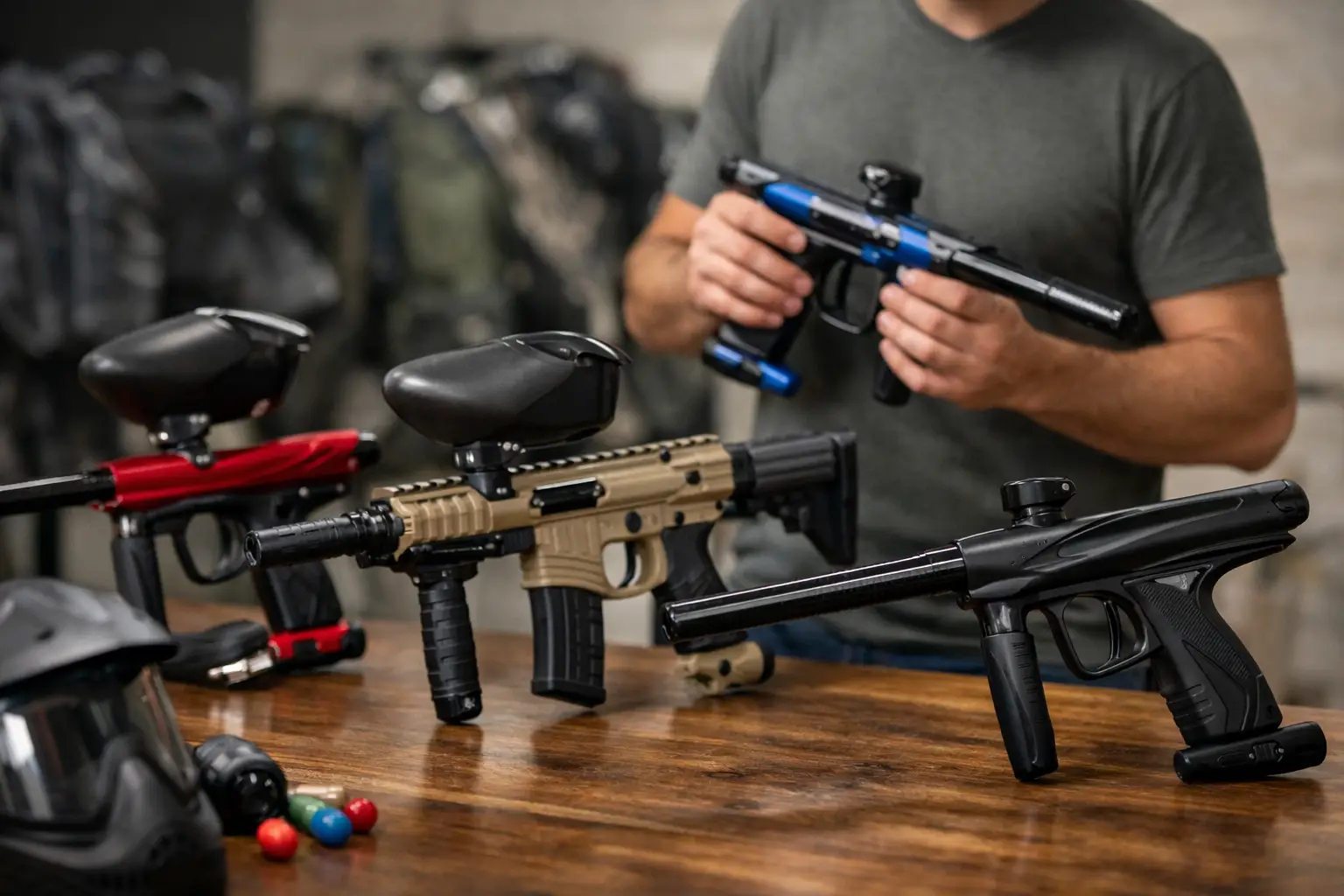
A paintball marker can look great on the wall and still be the wrong choice for your first game. The marker that helps a new recreational player have fun is not always the same one a tournament player wants in the pits. Knowing how to choose a paintball marker starts with being honest about where you play, how often you play, and what you are willing to maintain.
The best purchase is usually not the most expensive marker in the case. It is the one that is comfortable in your hands, legal at your local field, dependable with the paint you use, and supported with the right tank, loader, and protective gear. Start there, and your money goes toward more game days instead of fixing avoidable mistakes.
Start With Your Type of Paintball
Before comparing marker features, consider the games you actually plan to play. Woodsball, scenario events, backyard target practice where legal, rec-ball, and tournament speedball place different demands on equipment.
For casual woodsball and recreational players, reliability and ease of use matter more than electronic firing modes. A durable mechanical marker is often a smart starting point. Mechanical markers use a simple trigger-operated valve system, tend to be straightforward to learn, and can handle a long day of general play with basic care. They are also easier to troubleshoot when something goes wrong.
Speedball and competitive players often benefit from an electronic marker. Electronic markers can offer a lighter trigger pull, faster cycling, more consistent firing, and adjustable settings. The trade-off is that they cost more, require batteries, and demand more attention to setup and maintenance. Faster firing also means you need a loader that can keep up and a field-approved firing mode.
Scenario and tactical-style players may prioritize a marker’s profile, stock compatibility, magazine-fed setup, or ability to accept accessories. Those features can add realism and utility, but they can also add weight and expense. Buy them because they support the way you play, not because they look impressive in a product photo.
How to Choose a Paintball Marker by Budget
Set a complete setup budget, not just a marker budget. A marker alone will not get you ready for a game. You will also need an approved mask, paintballs, an air tank or CO2 tank if your field allows it, and a loader or hopper. Depending on the marker, you may also need batteries, a barrel swab, lubricant, and a gear bag.
A common mistake is spending nearly everything on the marker, then settling for a low-quality mask or the wrong air system. That is backward. Your mask affects safety, vision, comfort, and how long you can stay focused during a humid Florida game day. A quality thermal lens that resists fogging is one of the best upgrades a player can make.
For a first setup, look for value in these areas:
- A dependable entry-level mechanical marker from a proven manufacturer
- A field-approved HPA tank when practical for your local playing options
- A reliable gravity or electronic loader matched to the marker’s rate of fire
- A properly fitting thermal paintball mask
- Basic cleaning and maintenance supplies
If your budget is tight, buy a simpler marker and better essentials. You can add a nicer barrel, electronic loader, or other upgrades later. A dependable base setup is more useful than a premium marker paired with gear that does not fit or function well.
Choose HPA or CO2 With Your Field in Mind
Your air source is part of the marker decision. Some entry-level markers can run on either compressed air, commonly called HPA, or CO2. Others are designed specifically for HPA. Check both the marker manufacturer’s requirements and what your usual field fills before buying a tank.
HPA is the standard choice for many modern paintball setups. It provides more consistent pressure, is better suited to many electronic markers, and is generally less affected by temperature changes than CO2. In Central Florida heat, consistency and proper tank care still matter, but HPA is typically the easier long-term path for players who expect to play regularly.
CO2 can work well with compatible mechanical markers and may be available at some locations, but it has limitations. Cold weather, rapid firing, and certain marker designs can create pressure fluctuations. Do not assume a tank is interchangeable just because it threads onto the marker. Using the wrong air source can cause performance problems or damage equipment.
Tank size matters, too. A smaller tank is lighter and easier for younger players or anyone with a shorter reach. A larger tank provides more shots but changes the balance and length of the setup. Shoulder the marker with the tank installed before deciding. If you are stretching to reach the trigger frame or cramming the tank into your shoulder, the setup will feel awkward all day.
Fit, Weight, and Controls Matter More Than You Think
Paintball is active. You will carry your marker, shoulder it, aim around bunkers, and move through brush or across open lanes. A marker that feels only slightly too heavy at the counter can feel exhausting after several games.
Hold the marker in a natural firing position. Make sure you can reach the trigger comfortably, operate the safety without fumbling, and see down the barrel without forcing your head into an odd angle. If you are selecting a marker for a younger player, do not simply choose the least expensive option. Check the overall length, tank position, grip size, and weight.
For electronic markers, ask how the settings are changed and whether the controls are easy to understand. You do not need a dozen firing modes if your field allows only semi-auto. Simple programming is often an advantage, especially for a newer player who wants to spend time playing rather than navigating menus.
Reliability Beats Flashy Features
A good marker should shoot consistently, be easy to clean, and have readily available replacement parts. Paintball equipment gets dirty. Paint can break in the barrel, rain can find its way into gear bags, and dirt can collect around moving parts. A marker that is easy to service will save frustration over its lifetime.
Pay attention to the practical details: how the bolt comes out for cleaning, what lubrication it requires, whether it uses common O-rings, and whether its batteries and eyes are accessible. Eyes are sensors used on many electronic markers to detect a paintball in the breech before firing. They can help reduce ball breaks, but they also need occasional cleaning.
Do not chase upgrades before you have a reliable marker, tank, loader, and mask. A longer barrel will not fix poor-quality paint. A high-end trigger will not make a poorly maintained marker dependable. Upgrades work best when they solve a real problem you have already experienced.
Match the Loader to the Marker
Your loader feeds paintballs into the marker. For a basic mechanical marker fired at a moderate pace, a quality gravity-fed hopper may be all you need. It is simple, affordable, and has fewer parts to maintain.
If you use an electronic marker or plan to fire quickly, consider an electronic loader. It actively feeds paintballs and helps prevent gaps that can lead to chopped paint or inconsistent firing. The key is matching the loader to your marker and your legal rate of fire. More speed is not automatically better when it increases paint use and does not improve your game.
Also consider capacity. A standard hopper usually holds around 200 paintballs, but its shape, lid design, and balance can differ. A secure lid matters when you are moving hard through a game. Few things slow a player down like spilling a hopper full of paint in the staging area.
Buy With Service and Support in Mind
Paintball markers are mechanical equipment, and every marker will eventually need cleaning, seals, tuning, or repairs. That is normal ownership, not necessarily a sign that you bought the wrong product. The difference is whether you have access to knowledgeable support when you need it.
Buying from a specialty pro shop gives you the opportunity to handle the marker, ask compatibility questions, and get honest guidance on what works for your budget. It also gives you a place to bring the marker if it starts leaking, chops paint, or needs an upgrade installed correctly. Combat Zone Sports has served local players since 2003 and provides free lifetime maintenance on paintball markers purchased through the shop, which can add real value beyond the price tag.
Before you leave with a new setup, make sure you understand basic cleaning, safe storage, barrel blocking requirements, and how to depressurize the marker properly. Chronograph your marker at the field before every day of play, follow the field’s rules, and wear approved eye and face protection whenever you are in an active area.
The right marker should make you want to play more, not make you worry about every trigger pull. Handle a few options, ask direct questions, and choose the setup that fits your actual game day. The paintball marker that earns your trust after a full afternoon on the field is the one worth owning.