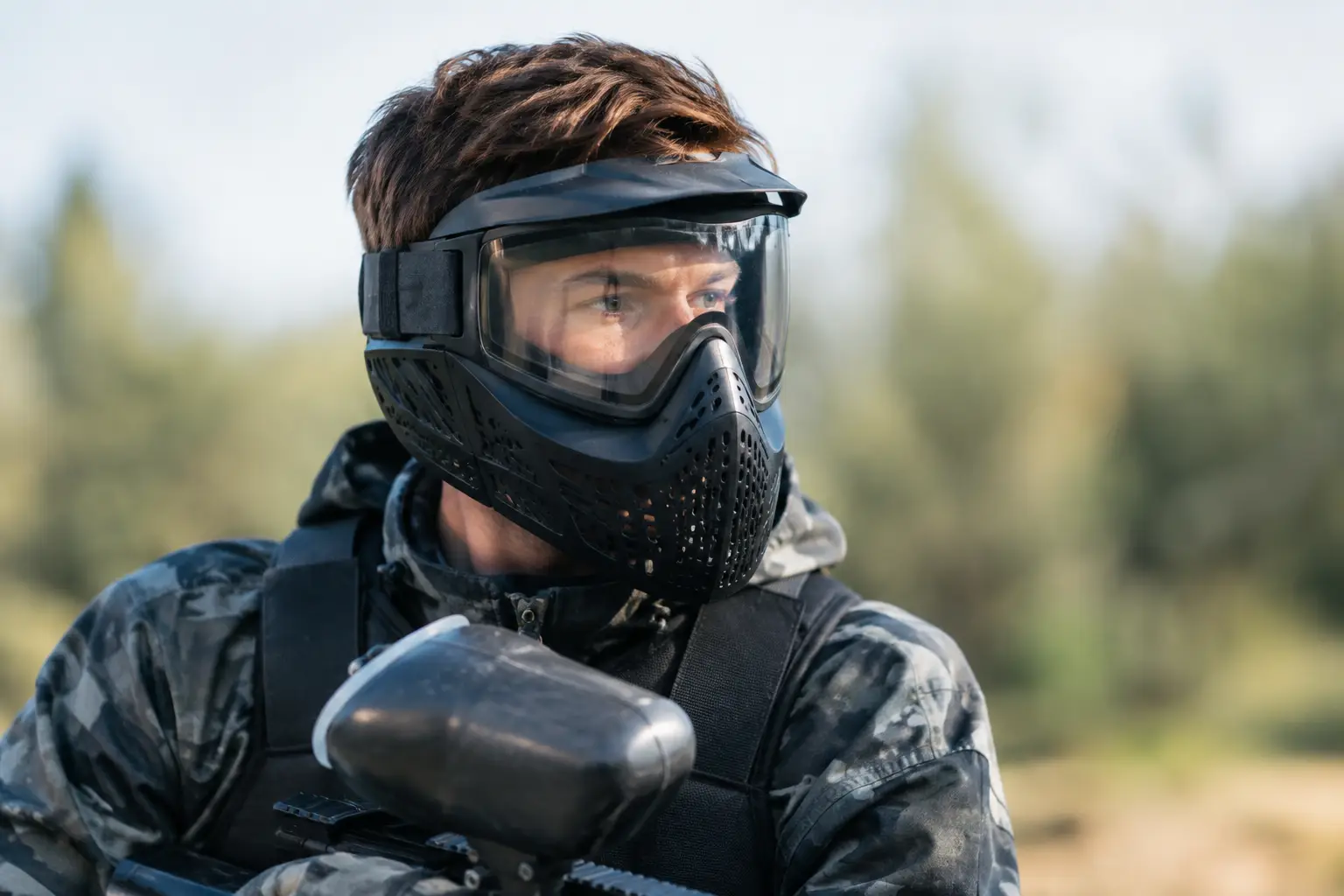
A paintball traveling at field-legal speed can turn a moment without eye protection into a permanent injury. That is why paintball mask safety requirements are not a minor gear detail or a place to chase the cheapest option. Your marker, hopper, air system, and loadout can change over time. Your eye protection needs to work every single game.
For new players, the biggest mistake is assuming any pair of tactical goggles, shop glasses, or airsoft eye protection will do. For experienced players, the risk is often a lens that has been used hard, cleaned poorly, or kept in service well past its condition. A proper paintball mask is a system: the lens, frame, strap, retention hardware, foam, and lower-face coverage all matter.
What Paintball Mask Safety Requirements Actually Mean and why Combat Zone Sports in Cocoa Florida can help you from start to finish picking one out.
At a U.S. paintball field, the baseline is a mask or goggle system specifically built and marked for paintball use. Look for compliance with ASTM F1776, the standard used for paintball eye protection. That marking is a far better starting point than relying on a product’s appearance, a vague claim that it is “impact rated,” or a recommendation from someone who has never used it under paintball conditions.
A paintball-rated system is designed to protect the eyes from direct hits, fragments, and angles that ordinary safety glasses do not fully address. It also needs to stay in place when you run, slide, turn your head, or take a hit. A lens with the right rating is not enough if it is installed in a damaged frame or worn with a stretched-out strap.
ANSI Z87.1 safety glasses are useful for many work tasks, but they are not a substitute for a paintball mask. Neither are mesh goggles, shooting glasses, or airsoft goggles unless the exact product is clearly rated and approved for paintball. Some equipment may carry multiple ratings, but players should go by the markings and manufacturer instructions for that specific model, not assumptions.
Your field’s rules still control. Some fields require full-face coverage, specific retention features, or a particular mask configuration for younger players. Read the rules before game day, and follow staff direction even if your personal setup has worked at another location.
Choose a Certified Mask That Fits Your Face
The best paintball mask is not automatically the most expensive model on the wall. Fit is the deciding factor. A high-end mask that leaves your jaw exposed, presses painfully against your nose, or shifts when you move is the wrong mask for you.
Put the mask on and adjust the strap until it is snug without creating pressure points. Shake your head, look up and down, and mimic the movements you make while playing. The frame should stay centered, and the foam should seal comfortably around the eye area. You should not be able to easily roll the mask upward or pull it away from your face.
Check your coverage in a mirror or have another player look at it. The lower portion should protect your nose, mouth, cheeks, and jaw in the way your field requires. Players with glasses need to verify that the mask fits over their frames without forcing the lens outward or creating painful contact points. Some masks work much better with prescription inserts than with bulky everyday glasses.
Fit can also change with headwear. A beanie, headband, helmet, or thick hood may affect where the strap sits. Test your actual game-day setup, not just the bare mask in a store. If you wear a helmet for scenario games, make sure it does not push the mask down, lift it at the forehead, or interfere with ventilation.
Thermal lenses help with fog, not impact rating
Central Florida humidity can fog a single-pane lens quickly, especially during a long walk-on day or a fast woodsball game. A thermal, dual-pane lens is one of the most practical upgrades a regular player can make. It reduces condensation by insulating the inner lens from the outside temperature.
That said, thermal does not mean invincible. A thermal lens still needs to be paintball rated, installed correctly, and replaced if damaged. Do not confuse better fog control with a higher safety standard. The right answer is a certified paintball lens that fits your mask, plus the anti-fog performance that matches how and where you play.
Inspect Your Mask Before Every Game Day
A 30-second inspection can catch problems that are easy to miss while loading gear in a hurry. Clean paint off the lens, check the strap, and look closely at the frame and retention points. Do this before you arrive at the field, not while your group is already being called for the safety briefing.
Pay attention to these four areas:
- Lens condition: Look for cracks, deep scratches, chips, cloudiness, peeling coatings, or a distorted viewing area.
- Lens retention: Confirm the lens is fully seated and every clip, lock, or retention tab is engaged according to the mask design.
- Frame and lower-face protection: Check for cracks, loose sections, broken vents, or separation around the jaw and ear areas.
- Strap and foam: Replace a strap that no longer holds tension. Watch for foam that is badly compressed, loose, deteriorating, or soaked with old sweat and paint.
Do not try to repair a cracked lens with tape, glue, or a home fix. Do not keep using a mask with missing retention hardware. Those parts are not cosmetic. They keep the protective system together when it takes an impact.
Clean the Lens Without Damaging It
Many lenses get ruined during cleaning, not during play. Paint and dirt are annoying, but aggressive cleaning can scratch the surface, damage coatings, or leave you with a hazy view that makes tracking players harder.
Use a clean microfiber cloth and the lens care method recommended by the mask manufacturer. Rinse off heavy debris gently first when needed. Avoid paper towels, dirty shirts, harsh household cleaners, ammonia-based products, solvents, and abrasive pads. A dry wipe across sand or dried paint can put fine scratches across the lens in seconds.
For thermal lenses, keep water and cleaner away from the edge where the two panes meet unless the manufacturer specifically says otherwise. Moisture between the panes can create fogging and visual distortion that will not simply wipe away. Store the mask in a protective bag or case, away from loose tools, paintball pods, and anything that can press against the lens in your gear bag.
Never leave your mask sitting in a hot vehicle for extended periods. Florida heat can be rough on foam, adhesives, straps, and lens materials. Let the mask dry after a wet game day, then store it somewhere clean, cool, and out of direct sun.
Know When a Lens Needs Replacement
There is no responsible shortcut here: replace a lens immediately if it is cracked, deeply scratched, chipped, delaminating, warped, or has taken an impact that leaves you uncertain about its condition. If you cannot see clearly through it, you should not play behind it.
Replacement timing also depends on the manufacturer’s instructions, how often you play, how the mask has been stored, and how much abuse it has seen. A player who competes every weekend and regularly plays in heat, rain, and woods may need to replace lenses sooner than an occasional recreational player. Age alone is not the only factor, but an old lens with an unknown history is not worth gambling on.
Only install a replacement lens made for your exact mask model. Lens shapes, clip locations, and frame tolerances vary. Forcing in a lens that “almost fits” can leave gaps or prevent the retention system from locking correctly. After installation, inspect every connection and test the fit before using it on the field.
Field Habits Matter as Much as the Mask
A certified, well-maintained mask protects you only while it is on your face. Keep it on anywhere paintball markers may be active, including staging areas when field rules require it. Do not lift it for fresh air, a clearer look, a photo, or a quick conversation. Step into the designated safe area first.
Make sure everyone in your group understands this before the first game. New players often follow the behavior they see from friends, so experienced players set the standard. Call out loose straps, damaged lenses, or poor fit early and respectfully. A few minutes of adjustment is better than a preventable injury.
At Combat Zone Sports, we can help players compare certified mask options, find a comfortable fit, and identify the right replacement lens before the next game. Bring in your current setup if you are unsure about its condition. Clear vision and solid protection make every game more enjoyable, and they let you focus on the next move instead of worrying about the gear on your face.