
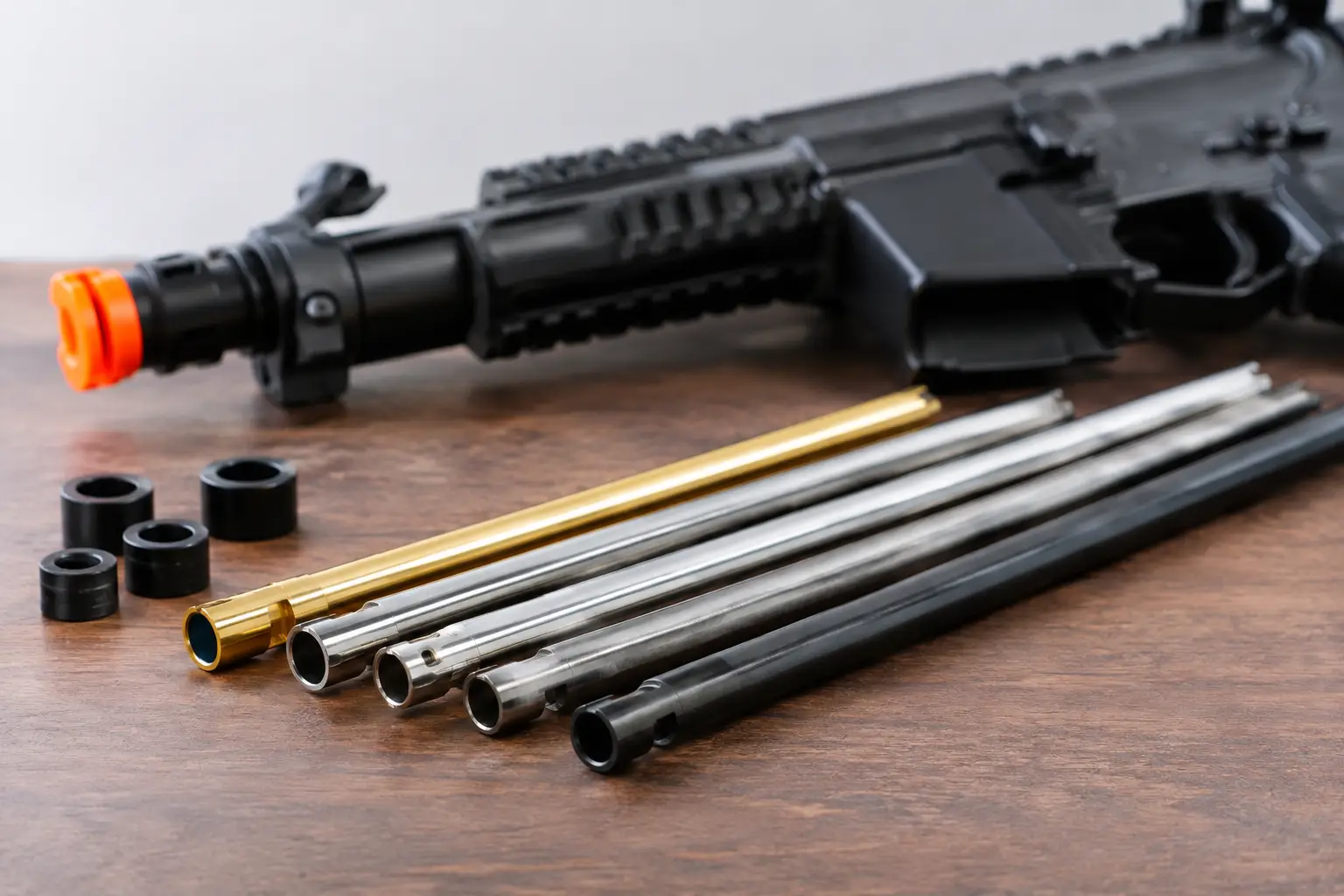
A good airsoft inner barrel guide starts with one truth many players learn after spending money twice: a barrel upgrade is not a magic accuracy button. The inner barrel works with your hop-up unit, bucking, BB weight, air seal, and overall build. Choose the wrong length or bore, install it carelessly, or pair it with poor ammunition, and an expensive barrel may not shoot any better than the stock one.
For a dependable primary, the goal is not the tightest barrel or the longest setup. The goal is consistent shots you can trust when the game gets moving. That means matching the barrel to the replica and the way you play.
What an Inner Barrel Actually Does
The inner barrel guides each BB from the hop-up chamber to the muzzle. Its internal finish, diameter, straightness, and cleanliness all affect how consistently the BB leaves the gun. Consistency is the real benefit you are chasing. A better barrel can reduce shot-to-shot variation and help your hop-up apply backspin more predictably.
That does not mean the barrel alone creates range. Hop-up is what gives a BB the lift needed to travel farther. If your bucking is worn, the hop-up arm is uneven, or the unit is moving in the receiver, replacing only the barrel is usually a partial fix at best.
Before buying anything, make sure the existing barrel is clean and the replica is using quality, polished BBs. Dirt, oil, fragments from cheap ammunition, and excess silicone can make a good barrel shoot poorly.
Airsoft Inner Barrel Guide: Choosing the Right Bore
Most upgrade barrels are described by their inner diameter, often called the bore. Stock barrels are commonly wider and less precisely finished than aftermarket options. The right bore depends on the build, ammunition, and conditions you expect to play in.
A 6.03 mm barrel is a popular all-around choice. It offers a modestly tighter path than many stock barrels without becoming overly demanding about BB quality. For most AEG players building a reliable field rifle, it is a sensible place to start.
A 6.01 mm or 6.02 mm barrel can produce excellent results with high-quality BBs and a properly tuned hop-up. The trade-off is less tolerance for debris, damaged ammunition, and poor maintenance. In humid Florida conditions, where dust and field debris can find their way into gear, that extra precision also means you need to keep the barrel clean.
Wider-bore barrels have their place too. Some players prefer them for specific high-volume or outdoor setups, and a quality wide-bore barrel can still be very accurate. Diameter alone does not decide performance. A straight barrel with a smooth finish, good crown, and correct installation matters more than chasing a number on the package.
Barrel Length: Match the Replica, Not the Hype
Longer barrels do not automatically make an airsoft gun more accurate. Once the BB has enough barrel length to stabilize and reach useful velocity, adding more length often brings diminishing returns. In some cases, excessive length can hurt efficiency or create air-volume problems.
The easiest rule is to start with the stock barrel length. If you are replacing a damaged or basic factory barrel, choose an upgrade barrel made for that platform and length. This avoids clearance issues and keeps your cylinder-to-barrel volume relationship close to what the manufacturer intended.
Changing length can make sense when you are changing the build. A short carbine converted to a suppressed setup may use a longer barrel that extends into the mock suppressor. A DMR-style build may use a longer outer barrel and matching inner barrel for a particular look and setup. Just do not extend a barrel only because longer sounds better.
For AEGs, cylinder volume matters most when making major barrel-length changes. A barrel that is too long for the available air volume may give inconsistent velocity, especially with heavier BBs. A barrel that is dramatically short for a large cylinder can be inefficient. If you are rebuilding an AEG, this is the point where getting an experienced tech involved can save parts and frustration.
Material and Finish Matter More Than Marketing
Brass, aluminum, and stainless steel barrels can all work. What matters is manufacturing quality.
Brass is common in stock replicas and can shoot very well when it is straight, clean, and properly finished. It is softer than steel and can scratch more easily, so it benefits from careful cleaning.
Stainless steel is a strong choice for many upgrade builds because it resists corrosion and holds up well over time. A quality stainless barrel is easy to maintain and is a practical option for a rifle that sees regular weekend use.
Aluminum barrels are lightweight and can be accurate, though quality varies widely. Avoid choosing any barrel based only on claims such as “ultra-polished” or “maximum precision.” Look for reputable machining, a clean hop-up window, and an even crown at the muzzle.
The crown is the final edge the BB passes as it exits. If it is rough or damaged, escaping air can push unevenly on the BB and create inconsistent shots. It is a small detail with a real effect.
Pair the Barrel With the Right Hop-Up Setup
A barrel and bucking should be treated as a pair. The hop-up window has to fit the bucking correctly, and the bucking lips need to seal well around the nozzle. A premium barrel paired with a leaking or poorly seated bucking is not an upgrade.
For most recreational AEGs, a quality standard bucking and properly fitted nub offer a major improvement without turning the gun into a project. More aggressive buckings, flat-hop setups, and R-hop style modifications can be excellent for players running heavier BBs at outdoor ranges, but they require careful installation and tuning.
Use BB weight that fits your replica’s output and hop-up capability. Many field rifles perform well with .25 g or .28 g BBs, while higher-powered outdoor builds may benefit from .30 g or heavier ammunition. Chronograph rules, local field limits, and the replica’s actual consistency should guide the decision. Heavier is not automatically better if the gun cannot hop it properly.
Installation Details That Make or Break Results
Inner barrel installation is simple in concept but easy to get slightly wrong. Small alignment problems can show up as flyers, inconsistent groupings, or unexplained feeding issues.
First, inspect the hop-up window and barrel exterior for burrs. Install the bucking so it sits squarely, with no twist or bunching. Make sure the alignment ridge on the bucking engages the barrel correctly. Then seat the barrel into the hop-up unit fully and secure any retaining clip or ring as designed.
The hop-up unit must stay centered in the receiver. If it shifts or the barrel has side-to-side movement, use the correct barrel spacers or stabilizers. Do not wrap random layers of tape around components without checking fitment. A temporary fix that presses the barrel off-center can create a new accuracy problem.
After assembly, test the replica with the hop-up off first. Watch for rolling BBs, double feeds, jams, or unusual velocity changes. Then add hop gradually until the BB flies flat before beginning its normal drop. Test at realistic engagement distances, not just across a garage or store counter.
Keep the Barrel Clean Without Ruining It
A clean inner barrel should be part of regular airsoft maintenance, especially after dusty games or a day where the rifle was dropped, stored muzzle-down, or exposed to rain. Use an unjamming rod with a clean, lint-free patch. A small amount of airsoft-safe cleaner can help remove stubborn residue, but the barrel should be dry before shooting.
Avoid leaving silicone oil inside the barrel. Silicone belongs where it is needed for seals, not on the surface that guides your BB. Oil in the bore can cause inconsistent hop and attract more dirt.
Replace a barrel only when there is a clear reason: visible damage, poor factory finish, an upgrade build that needs a different length, or accuracy problems that remain after the hop-up, ammunition, and cleaning basics have been checked. Combat Zone Sports can help inspect a rifle and recommend parts that make sense for the replica instead of selling an upgrade that does not solve the issue.
A well-matched barrel is one of the best ways to refine a reliable airsoft gun, but the smart move is to build around consistency. Bring the replica, the BB weight you normally use, and a clear idea of how you want it to perform on game day. That gives you a much better starting point than buying the tightest barrel on the shelf.