
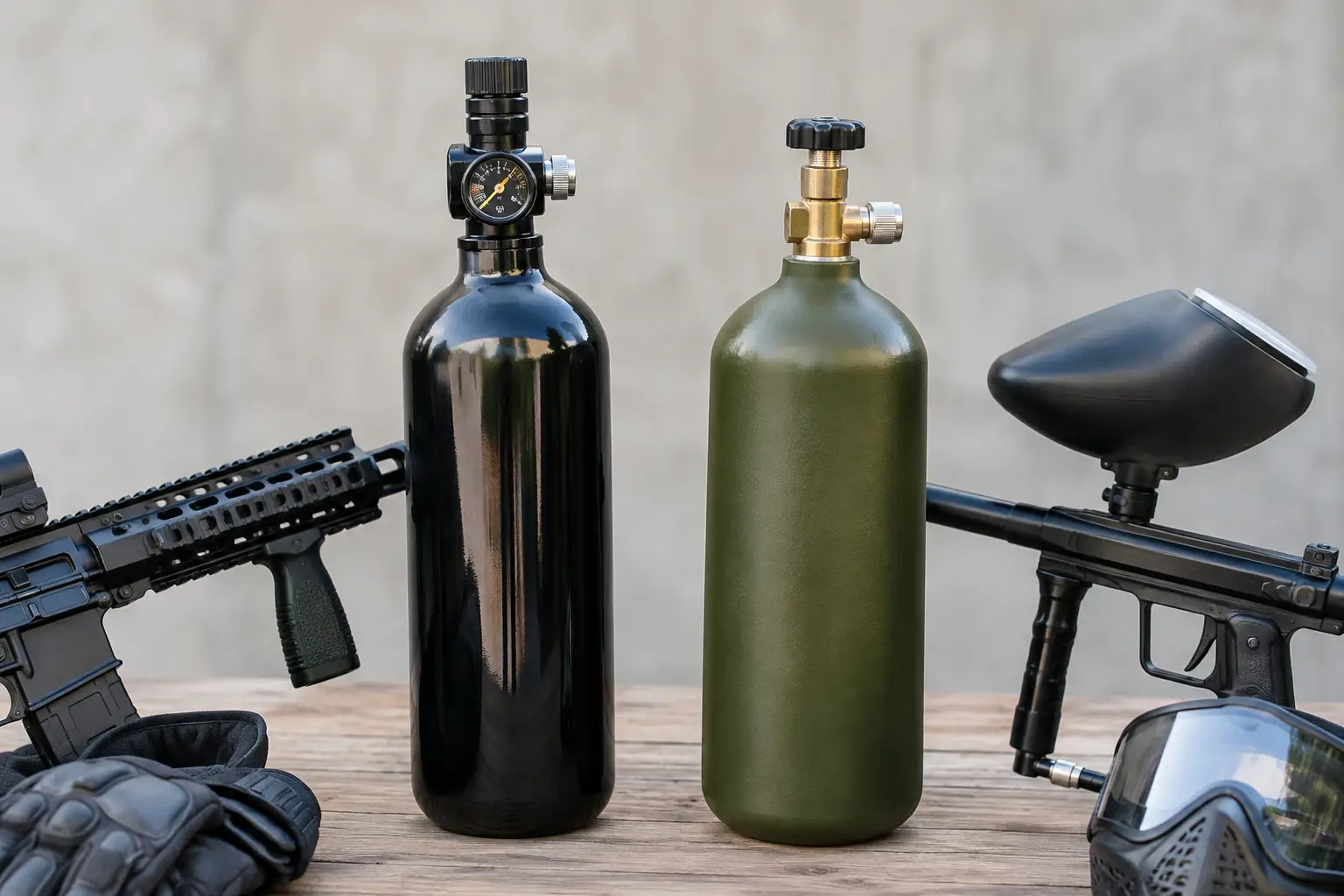
A player walks into the shop needing air for the weekend, sees a compact CO2 tank and a larger HPA bottle, then asks the question that matters: which one will actually work better with my gear? HPA versus CO2 is not about picking the most expensive option. It is about matching the air system to your marker or replica, the way you play, and the support available where you play.
Both systems can be effective. Both also have limits that can cost you performance, money, or a game day if you buy the wrong setup. Here is the practical difference.
HPA versus CO2: The Core Difference
CO2 is carbon dioxide stored as a liquid under pressure. When the marker fires, a small amount of liquid turns into gas and propels the paintball or airsoft BB. It is compact, widely familiar, and commonly used in 12-gram cartridges, larger refillable tanks, and certain airsoft magazines.
HPA means high-pressure air, also called compressed air or nitrogen. An HPA tank holds compressed gas and uses a regulator to reduce the tank’s high internal pressure to a usable output pressure for the marker or airsoft system. Most paintball HPA tanks are rated at 3,000 or 4,500 psi, but that is tank pressure, not necessarily the pressure delivered to the marker.
The big practical difference is pressure behavior. CO2 pressure changes sharply with temperature and with rapid firing. HPA provides far more consistent pressure from shot to shot, which is why it has become the standard choice for many paintball players and serious HPA airsoft builds.
Why Consistency Changes Your Game
CO2 can work very well on a moderate-temperature day when you fire at a reasonable pace. Its weakness shows up when conditions are less forgiving. As CO2 expands, it cools. Fire quickly, and the tank and valve can become cold enough that pressure drops. That can cause velocity swings, reduced range, inconsistent cycling, or even temporary marker issues.
Cold weather makes the problem worse. A setup that feels fine during a warm Florida afternoon may behave differently during a cool morning game or after repeated strings of shots. CO2 systems also need seals and components designed for CO2 use. Liquid CO2 reaching an incompatible valve or regulator can lead to damage and leaks.
HPA is much more stable across normal playing conditions. You get more predictable velocity, more repeatable shot behavior, and fewer performance surprises during fast play. For paintball, that consistency makes chronographing easier and helps keep a marker operating within field velocity limits. For airsoft, it makes tuning an HPA engine or regulated gas setup more straightforward.
That does not mean HPA makes every marker more accurate by itself. Barrel quality, paint-to-barrel match, hop-up condition, BB quality, maintenance, and player technique still matter. HPA simply gives the system a steadier source of pressure to work with.
When CO2 Still Makes Sense
CO2 is not obsolete. It remains a sensible choice for equipment specifically designed around it, especially simple mechanical paintball markers, certain pistols, and airsoft platforms that use 12-gram cartridges or CO2 magazines.
For a player who shoots occasionally and wants a compact, straightforward setup, CO2 can be affordable and convenient. A 12-gram cartridge is easy to pack for a backyard target session or a sidearm that was built to run on CO2. Many players also prefer the stronger recoil sensation that some CO2 airsoft pistols produce in warm weather.
The catch is that convenience depends on access. Once a cartridge is pierced, you generally use it until it is empty. Carrying spares is normal. Larger refillable CO2 tanks require CO2 filling capability, and not every paintball field or store handles those fills anymore.
CO2 is best treated as platform-specific. If the manual says your marker or magazine is CO2 compatible, use quality cartridges, inspect seals, and avoid leaving a cartridge installed for long storage unless the manufacturer specifically permits it. If the equipment is labeled compressed-air-only, do not substitute CO2 just because the threads fit.
When HPA Is Worth the Investment
HPA costs more at the start. You need a tank, and airsoft HPA setups may also require a regulator, line, and an engine or adapter designed for the system. But for players who attend games regularly, the performance and refill convenience often justify the cost.
Paintball players benefit from reliable operation, stable velocity, and the ability to shoot at a faster pace without the severe cooldown associated with CO2. Most modern electropneumatic paintball markers are designed around HPA, and many mechanical markers also run their best on compressed air.
In airsoft, HPA is a different category from a standard green-gas or CO2 pistol. An HPA engine build replaces or modifies the internal power system of an AEG, while tapped magazines and remote-line setups can supply regulated air to compatible gas blowback platforms. The appeal is tunability. With the correct regulator and a careful setup, players can adjust operating pressure to achieve dependable cycling and field-legal velocity.
That tunability also creates responsibility. Higher pressure is not automatically better. Running an airsoft system outside the manufacturer’s recommended range can damage parts or create an unsafe velocity level. A chronograph is not optional after an HPA installation or pressure adjustment. Follow the rules of the field you are attending, including any restrictions on tournament locks, regulators, full-auto fire, and minimum engagement distances.
Tank Size and Fill Pressure Matter
A 48/3,000 HPA tank is a familiar entry point for paintball players. It is generally more affordable and easier to carry than a larger 4,500 psi tank, although it holds less usable air. A 68/4,500 tank offers more shots per fill but costs more and must be filled from a system capable of reaching 4,500 psi.
For airsoft, tank choice often comes down to how you carry your gear. Smaller tanks can fit in a pack or purpose-built pouch and keep the load manageable. Larger tanks extend time between fills but add weight and bulk.
Do not choose only by tank size. Confirm where you will fill it. A 4,500 psi tank can still be filled at a 3,000 psi source, but it will only receive a 3,000 psi fill. That is not harmful, but it means less runtime than the tank’s full rating suggests.
Cost Is More Than the Tank Price
CO2 usually wins on entry price. Cartridges are inexpensive individually, and a basic CO2-compatible platform may require no additional air system. Over time, though, frequent cartridge purchases add up, especially for players who shoot a lot.
HPA has a higher upfront cost, but fills can be economical when local access is good. The actual value depends on how often you play, whether your field includes air fills, and whether you have a nearby pro shop that can inspect tanks and help with compatible equipment.
Also factor in service life. HPA tanks require periodic hydrostatic testing. The test date is stamped on the tank, and expired tanks cannot be legally filled until they are retested. Do not buy a used tank based only on appearance. Check its hydro date, threads, regulator condition, and overall condition before putting it into service.
Safety and Compatibility Come First
Never use oil or petroleum-based lubricants on HPA tank fill connections or regulators. Keep the fill nipple covered and clean, protect tank threads, and do not leave a tank in a hot vehicle. Inspect O-rings for cuts or flattening, and address leaks instead of overtightening components.
CO2 deserves the same respect. Avoid exposing cartridges or tanks to extreme heat, use the correct seals, and fully degas equipment before disassembly. If a marker vents, freezes excessively, or begins leaking after a fill, stop using it until the issue is identified.
The simplest buying rule is this: use the air source your specific marker, magazine, regulator, or engine was designed to use. Thread compatibility does not prove pressure compatibility. A quick conversation with someone who can inspect the actual equipment is cheaper than replacing damaged internals later.
The Right Choice for Your Setup
Choose CO2 if your marker or airsoft magazine was made for it, you value compact cartridges, and your shooting is casual enough that cooldown and cartridge replacement are acceptable trade-offs. It is a practical system when used within its intended limits.
Choose HPA if you want dependable pressure, play regularly, use a modern paintball marker, or are building an adjustable airsoft setup. It is the stronger long-term choice for players who care about repeatable performance and have dependable fill access.
If you are unsure what your current gear accepts, bring it in before buying tanks, adapters, or regulators. At Combat Zone Sports, the best recommendation starts with the equipment in your hands, how often you play, and what will keep you ready for the next game – not with the most expensive item on the shelf.