
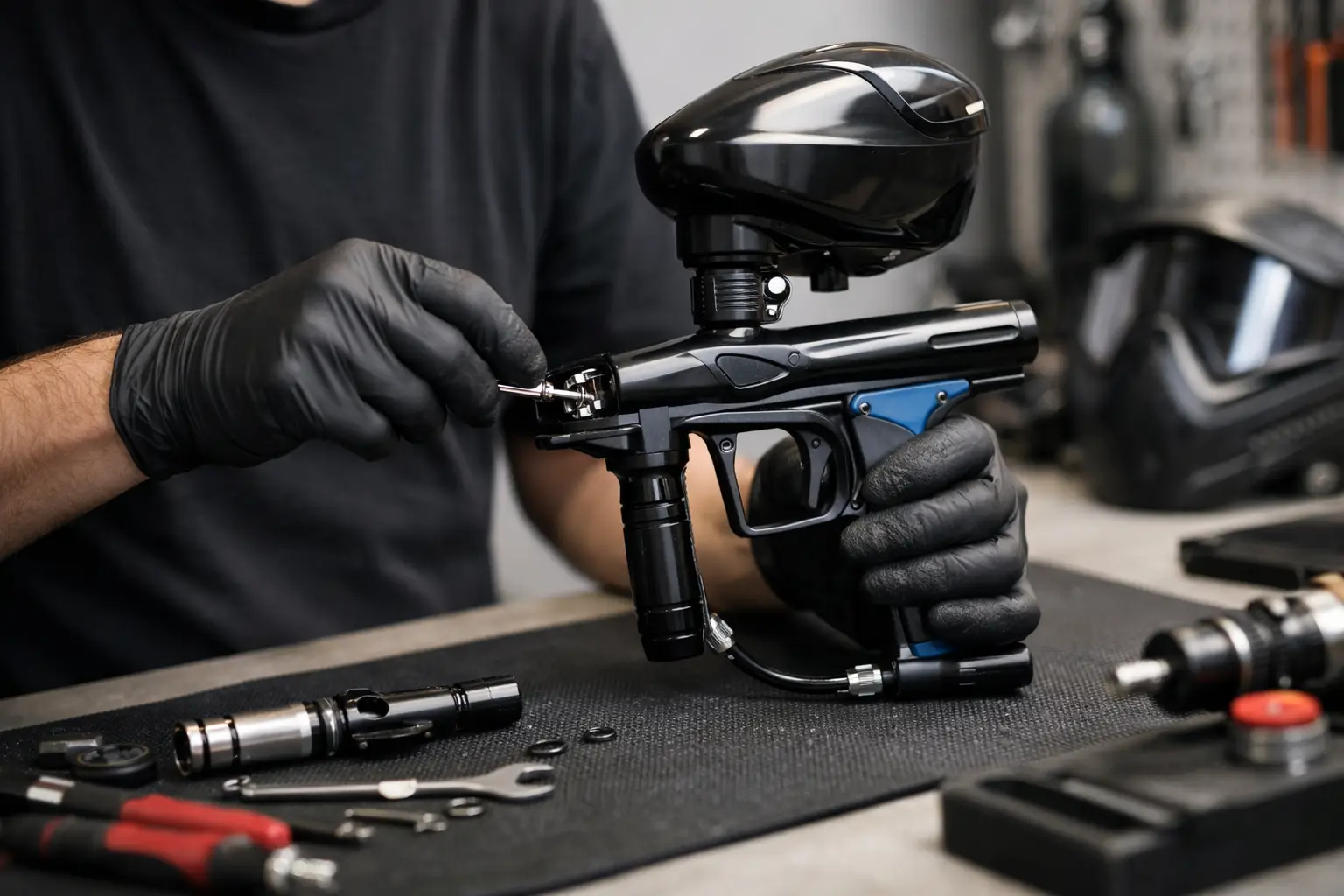
A marker that leaks air in the staging area, chops paint halfway through a game, or refuses to cycle when the countdown starts is more than frustrating. It can waste a full day of play. A professional paintball marker repair service helps you find the real cause, fix it correctly, and avoid buying parts or upgrades your setup does not actually need.
At Combat Zone Sports, we have worked with paintball players across Central Florida since 2003. Whether you are bringing in a first marker for its first tune-up or a tournament setup that has lost consistency, the goal is the same: get reliable equipment back in your hands with honest advice about what makes sense for your budget and style of play.
When a Paintball Marker Repair Service Makes Sense
Some marker issues are obvious. A steady hiss from the grip, ASA, regulator, or barrel usually points to an air leak. A marker that will not fire may have a low tank, dead battery, blocked breech, worn detent, or a mechanical issue inside the firing system. Other problems are less obvious, such as velocity that changes shot to shot, bolt stick after a long day, or paint breaking even when you are using good paint.
A repair service is especially worthwhile when the problem returns after basic cleaning and fresh batteries, when air is leaking from an area you cannot safely access, or when the marker has been sitting for months or years. Internal seals can dry out, grease can collect dirt, and old paint residue can turn a small maintenance need into an unreliable marker.
It also makes sense to bring the marker in before a big scenario game, tournament, birthday outing, or weekend trip. Waiting until the night before a game to discover a leak or cycling problem creates pressure and often leads to rushed decisions. A quick inspection ahead of time is cheaper than missing a day you already planned around.
Common Paintball Marker Problems We See
Paintball markers are built for impact and outdoor use, but they still rely on clean air paths, properly lubricated moving parts, healthy batteries, and compatible paint. Most repair visits start with one of a few familiar issues.
Air Leaks and Pressure Problems
Leaks are often caused by a damaged or dirty O-ring, but the location matters. A leak from the tank connection may be a tank O-ring or ASA issue. A leak down the barrel can involve the valve, cup seal, bolt, or regulator depending on the marker design. Air escaping from the grip frame or rear of the marker can point to a different seal or internal component.
Replacing random O-rings may stop the noise temporarily, but it does not always address why the seal failed. Incorrect lubrication, debris, overtightened fittings, or an air system issue can create repeat leaks. A proper diagnosis looks beyond the first failed part.
Failure to Fire or Cycle
If an electronic marker powers on but does not cycle, start with the basics: use a known-good battery, confirm the safety is off, check that the eyes and breech are clean, and make sure the air tank is filled and functioning. Mechanical markers need a different inspection, including the trigger, sear, valve, and hammer or bolt system.
Do not force a trigger or keep dry-firing a marker that sounds wrong. Continuing to cycle a marker with a stuck bolt, low pressure, or failing solenoid can make the original repair more involved.
Chopping Paint and Poor Accuracy
Broken paint inside the breech can come from brittle paint, dirty eyes, a damaged detent, excessive velocity, a poorly adjusted loader, or a bolt system that needs service. Accuracy complaints can also be tied to barrel cleanliness, damaged barrel threads, poor paint-to-barrel fit, inconsistent air pressure, or old paint exposed to heat and humidity.
The marker is not always the only variable. Quality paint, a clean barrel, and a properly set loader are part of reliable performance. That is why a good repair conversation includes the air system, loader, paint choice, and how the marker is being used.
Inconsistent Velocity
Velocity swings are not something to ignore. Besides making the marker feel unpredictable, they can create field-safety concerns and leave you constantly adjusting at the chronograph. The cause may be a dirty regulator, worn seals, moisture or debris in the air system, low battery voltage, old lubricant, or a marker that needs a complete cleaning and inspection.
A technician can test the marker through repeated shots rather than relying on one reading. Consistency matters more than seeing a single acceptable number on the chrono.
What to Do Before Bringing Your Marker In
You do not need to disassemble your marker before service. In fact, if you are unsure of the platform, it is better not to pull apart parts that are under spring tension or easy to misplace. A few simple steps will make the inspection faster and safer.
Remove all paintballs from the loader and marker, then make sure the marker is unloaded. Degas the marker according to its manual and remove the air tank if appropriate for your setup. Wipe off heavy paint and dirt, but do not soak electronics or spray cleaners into the grip frame.
Bring the parts that affect the problem. If the issue happens with a specific loader, barrel, tank, or remote line, bring it along. If your marker only leaks with one tank, that detail matters. It also helps to explain when the problem began, what you were doing when it happened, and whether any parts were recently changed.
For electronic markers, avoid leaving the battery installed for long storage periods. For all markers, store them clean, dry, and out of extreme Florida heat. Heat can affect paint, batteries, seals, and lubricants long before the next game day.
Repair, Maintenance, or Upgrade?
These are different jobs, even though they often overlap. A repair addresses a fault that prevents normal operation. Maintenance keeps a working marker dependable through cleaning, lubrication, seal inspection, battery checks, and velocity testing. An upgrade changes how the marker performs or feels, such as a better barrel setup, trigger, loader, air system, or electronic configuration where permitted.
The right choice depends on the marker and your goals. A new player with a dependable entry-level marker may get more value from proper protective equipment, paint, and regular maintenance than from performance parts. An experienced player chasing faster, more consistent play may benefit from a carefully chosen upgrade after the marker is operating correctly.
Fix reliability first. Upgrading a marker that has an unresolved leak, inconsistent velocity, or loader issue can hide the original problem and spend money in the wrong place. A good pro shop should tell you when a repair is worthwhile, when a basic service will solve it, and when replacement may be the smarter option.
Why In-Person Diagnosis Still Matters
Online videos can be useful for learning basic marker care, especially for owners who enjoy working on their own equipment. But no video can inspect your specific leak, hear how your marker cycles, check its velocity consistency, or compare the condition of the parts in front of you.
In-person service is also valuable when you are not sure which generation or version of a marker you own. Parts, O-ring sizes, board settings, and maintenance procedures can vary between models that look almost identical. Guessing can lead to incompatible purchases and more downtime.
For players in Cocoa, Melbourne, Titusville, Palm Bay, Orlando, Daytona Beach, and surrounding Central Florida communities, having a local shop means you can ask questions before spending money. You can also get practical guidance on air systems, paint, loaders, protective gear, and maintenance habits that fit the way you play.
Keep Your Marker Ready Between Games
The best repair is the one you never need because small issues were caught early. After each day of play, remove paint residue from the breech and barrel, inspect the bolt area, and make sure no broken paint has dried inside the marker. Use the lubricant recommended for your marker, not whatever oil happens to be in the garage.
Before the next outing, check your battery, tank O-ring, barrel, loader feed path, and basic function. Chronograph safely at the field and follow that field’s velocity rules. If something feels different, such as a new leak, delayed firing, strange sound, or sudden change in accuracy, deal with it before it becomes a sideline problem.
Combat Zone Sports offers free lifetime maintenance on paintball markers, giving local players a place to keep their gear checked after the sale. Bring your marker in, explain what it is doing, and let an experienced pro-shop team help you make the next game about playing, not troubleshooting.